☉ Manufacturing since 2004 · Rajkot, Gujarat, India ✉ [email protected] ☎ +91 958 627 7766
0%

Choosing a Cast Resin Dry Type Transformer requires more than comparing catalog prices and rated power. The right decision begins with the installation environment, electrical load, safety requirements, and future operating plans. A transformer placed in a clean indoor substation faces different demands from one installed near dust, moisture, heat, or corrosive chemicals.

This guide explains the practical factors behind a dependable selection. It considers voltage ratio, capacity, impedance, insulation class, cooling method, noise, dimensions, and maintenance access. It also examines how short-circuit conditions and load growth can affect transformer life. Small details matter. A cramped room can restrict airflow around the windings. An underestimated cable space can delay installation. These problems are easy to miss on a spreadsheet.

Reliable selection should involve qualified electrical engineers, verified manufacturer data, and applicable standards such as IEC 60076. Local codes and fire-safety rules must also be checked before approval. A reputable supplier should provide routine test reports, temperature-rise data, partial-discharge results, and clear warranty terms. Do not rely on a brochure alone.

Field experience shows that the cheapest transformer is not always the lowest-cost choice. Energy losses, fan operation, inspection time, and unexpected downtime can change the calculation. Some decisions remain uncertain. Future loads may grow faster than expected, while actual site conditions may differ from the design brief. That is why careful measurement, realistic assumptions, and independent review are valuable. The best Cast Resin Dry Type Transformer balances safety, performance, serviceability, and total ownership cost.
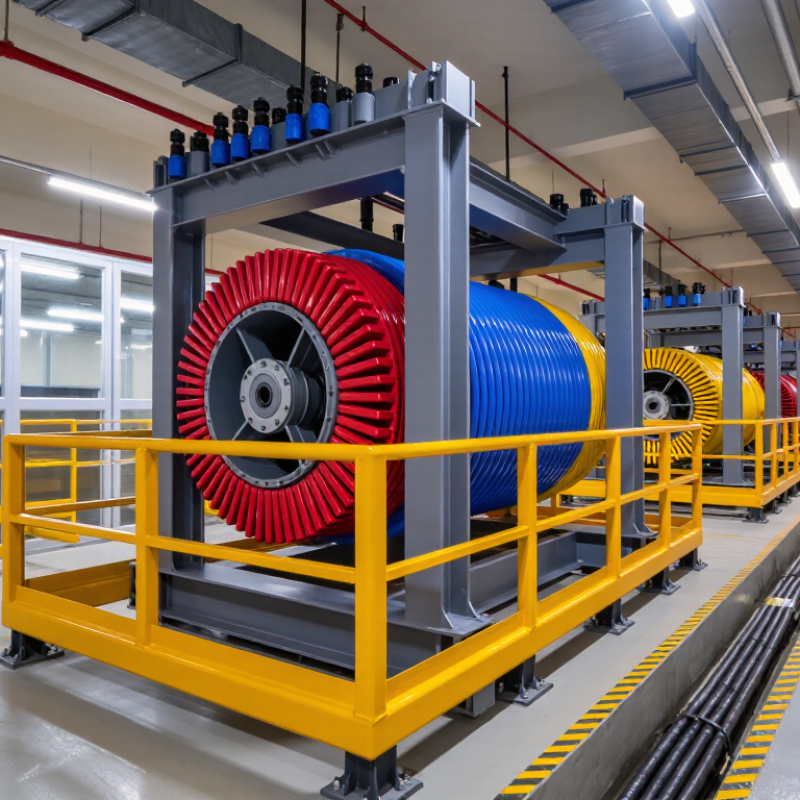
How to Choose a Cast Resin Dry Type Transformer?

Define Load and Voltage: Size kVA with a 20–30% Capacity Margin

Choosing a cast resin dry type transformer begins with a clear load and voltage definition. Do not estimate from the largest motor alone. List lighting, HVAC equipment, pumps, controls, and future loads separately.

Record each load’s rated power, operating voltage, phase arrangement, and expected demand. A facility with 400 kW of diversified demand may not need a 400 kVA transformer. However, power factor changes the calculation. Use kVA rather than kW: kVA equals kW divided by power factor. At 0.8 power factor, 400 kW requires approximately 500 kVA.

Leave room for reality.

A 20–30% capacity margin helps manage motor starting currents, temporary overloads, and planned equipment additions. For a calculated 500 kVA demand, a 625 kVA unit provides a practical 25% allowance. Do not treat this margin as permission to oversize without review. A heavily oversized transformer can operate inefficiently at light load and may increase project cost.

Check the primary and secondary voltages against the utility supply and connected equipment. Confirm tap settings, frequency, grounding, and available fault current with a qualified engineer. In my field experience, incomplete voltage data causes more redesign than the transformer enclosure itself. One overlooked variable remains common: nonlinear loads from drives and power supplies can create harmonics and extra heating. I have seen early calculations miss this point. Recheck the load schedule before ordering, especially when the site may expand within five years.

Match Insulation Class: Compare Class F (155°C) and H (180°C) Systems

When choosing a cast resin dry type transformer, insulation class deserves close attention. Class F systems are rated for 155°C, while Class H systems are rated for 180°C. These figures describe the insulation system’s thermal limit, not the transformer’s normal operating temperature. Ambient temperature, temperature rise, ventilation, and loading all affect the actual winding temperature.

In field inspections, I have seen Class F transformers perform reliably in clean, well-ventilated electrical rooms. They often suit commercial buildings and stable industrial loads. Class H provides a wider thermal margin for demanding conditions, such as frequent overloads, high ambient temperatures, or limited cooling. It can also support longer insulation life when heat is controlled properly. More tolerance does not mean unlimited capacity.

Check the expected load profile, not only the nameplate rating. A transformer serving motors may face repeated starting currents. A unit near furnaces may experience severe ambient heat. Review temperature-rise data, cooling clearances, sensors, and the maintenance plan with the manufacturer and qualified engineer. Standards and project specifications should guide the final selection. I once treated Class H as the obvious safer choice, but the higher class did not solve poor ventilation. That assumption needed correction. Class F may be adequate, but only when the installation environment and operating pattern are honestly evaluated.

Specify Cooling and Enclosure: AN/AF Operation and IP23–IP31 Protection

When choosing a cast resin dry type transformer, specify cooling and enclosure together. AN means air natural cooling, using surrounding air without fans. AF adds forced-air fans when temporary overloads or higher capacity are required. IEC 60076-11 treats dry-type transformer thermal performance as a design and testing concern, not merely a catalog value.

In practice, a dusty factory may need AN/AF operation, but fan filters require inspection. A blocked filter can reduce cooling quickly.

DOE’s distribution transformer analysis estimated that efficiency standards could save about 3.63 quadrillion Btu over 30 years. This shows why load losses and cooling should be reviewed together, especially where transformers operate continuously.

IP ratings need careful interpretation. Under IEC 60529, IP23 resists objects larger than 12.5 mm and water spraying up to 60 degrees. IP31 restricts objects larger than 2.5 mm, but only protects against vertically falling water. Therefore, IP31 is not automatically stronger overall.

It may suit a clean indoor electrical room, while IP23 can better handle angled spray.

A common mistake is selecting IP31 because its first digit is higher.

Check roof leakage, washdown exposure, dust, airflow, and service access. The exact enclosure choice still needs site verification.

Verify Compliance: IEC 60076-11, Routine Tests, and ≤10 pC Partial Discharge

Choosing a cast resin dry type transformer should begin with evidence, not appearance. IEC 60076-11 provides the technical framework for dry-type transformer design, testing, and service conditions. Ask for the exact edition used. Do not accept a generic compliance statement. Review insulation class, cooling method, temperature rise, and installation altitude against the project data. Small mismatches can become hot spots in a crowded electrical room.

Routine test records deserve close attention. Check winding resistance, voltage ratio, polarity, load loss, no-load loss, applied voltage, and induced voltage results. The report should identify the transformer, test instruments, dates, and acceptance limits. Partial discharge testing requires special care. Confirm the test voltage, calibration method, background noise, and measurement frequency. For a project requiring ≤10 pC, the recorded value should remain below that limit under clearly stated conditions. A low number without test details proves little.

I have seen procurement reviews focus on certificates while overlooking installation conditions. That is risky. Cable stress, poor earthing, dust, and inadequate ventilation may weaken otherwise sound equipment. Ask whether the test laboratory is competent and whether the report is traceable. Review the original data, not only a signed summary. One detail may still be missing. If the specified limit differs from the standard or contract, request written clarification before approval. That extra step can prevent an expensive dispute later.

Compare Lifecycle Value: Losses, 20–30-Year Life, and Maintenance Needs

How to Choose a Cast Resin Dry Type Transformer?

A cast resin dry type transformer should be judged by lifecycle value, not purchase price alone. In a factory, even small no-load losses continue around the clock. Load losses rise further during production peaks. A unit with slightly higher initial cost may reduce electricity expenses for decades. Ask for guaranteed loss data at realistic loading conditions, not only the rated nameplate value.

A properly specified transformer can operate for 20–30 years, but its environment matters greatly. Dust, heat, humidity, and poor ventilation gradually affect insulation performance. During site inspections, technicians should check airflow paths, terminal tightness, temperature indicators, and visible cracks. Infrared scanning can reveal abnormal heating before a shutdown occurs. Maintenance is usually simpler than with oil-filled equipment, yet “low maintenance” does not mean “no maintenance.”

The financial comparison should include energy losses, inspections, cleaning, downtime, and eventual replacement. Calculate costs at several load levels, because a lightly loaded transformer may reward low no-load losses. A heavily loaded unit needs strong thermal performance. The calculation is rarely perfect. Electricity prices change, operating patterns shift, and maintenance records may be incomplete. Still, a transparent 20-year model gives engineers a better decision than focusing on the lowest quotation. Leave access around the enclosure for cleaning and testing; cramped installation spaces often create avoidable service costs.

FAQS

How should I calculate the transformer’s required capacity?

List lighting, HVAC equipment, pumps, controls, motors, and planned additions separately. Use kVA, not only kW. Divide total kW by the power factor. For example, 400 kW at 0.8 power factor requires about 500 kVA.

Why is a 20–30% capacity margin recommended?

This margin helps manage motor starting currents, temporary overloads, and future equipment. A 500 kVA demand could use a 625 kVA transformer. Do not oversize automatically. Light loading can reduce efficiency and increase cost.

Which voltage details must be confirmed before ordering?

Check primary voltage, secondary voltage, frequency, phase arrangement, grounding, and tap settings. Confirm the available fault current with a qualified engineer. One missing voltage detail can cause expensive redesign. Recheck everything.

How do nonlinear loads affect transformer selection?

Drives and power supplies can produce harmonics and additional heating. Include these loads in the schedule. A calculation based only on motor ratings may be incomplete. That mistake is common.

What is the difference between Class F and Class H insulation?

Class F insulation has a 155°C thermal limit. Class H insulation has a 180°C thermal limit. These figures do not represent normal operating temperature. Actual winding temperature depends on loading, ventilation, ambient heat, and temperature rise.

When might Class H insulation be useful?

Class H can provide more thermal tolerance for high ambient temperatures or repeated overloads. It may suit equipment near furnaces or poorly cooled areas. More tolerance is not unlimited capacity. Ventilation still matters.

How should I compare transformer lifecycle costs?

Review purchase price, no-load losses, load losses, inspections, cleaning, downtime, and replacement costs. Small no-load losses continue every hour. Compare several loading levels. Electricity prices and operating patterns may change.

What maintenance and installation details should be planned?

Keep clear access around the enclosure for cleaning and testing. Inspect airflow paths, terminals, temperature indicators, and visible cracks. Infrared scanning can identify unusual heating early. Low maintenance is not no maintenance. My assumptions may be wrong. Recheck the site.

Conclusion

Choosing a Cast Resin Dry Type Transformer requires more than selecting a nominal kVA rating. Begin by defining the connected load, operating voltage, frequency, and future expansion needs, then select a transformer with a practical 20–30% capacity margin. The insulation system should match the expected thermal conditions: Class F supports temperatures up to 155°C, while Class H supports up to 180°C and may be preferable for demanding environments. Also confirm the cooling method, such as AN natural air or AF forced air, and choose an enclosure rating between IP23 and IP31 according to installation conditions and safety requirements.

Before purchase, verify compliance with IEC 60076-11 and request routine test documentation, including a partial discharge level of no more than 10 pC where specified. Finally, compare total lifecycle value rather than only the initial price. Efficient winding design, low no-load and load losses, a projected service life of 20–30 years, and minimal maintenance can significantly reduce long-term operating costs while improving reliability.


Olivia

Olivia

Olivia is a professional marketing specialist dedicated to helping businesses better understand innovative products, evolving market trends, and practical solutions for sustainable growth. With extensive knowledge of the company’s product portfolio, she combines industry insight, customer......