☉ Manufacturing since 2004 · Rajkot, Gujarat, India ✉ [email protected] ☎ +91 958 627 7766
Technical Architecture

What is a Compact Secondary Substation (CSS)? Sizing, Compartmentalization & Standard Definitions

A Compact Secondary Substation (CSS) — frequently designated in global tender specifications as a Packaged Substation, Kiosk Substation, or Prefabricated Secondary Substation — is a factory-built, type-tested enclosure housing three distinct electrical functional units: High Voltage switchgear, a step-down power or distribution transformer, and Low Voltage distribution switchboards, connected by internal busbars or cable trunks.

Governed internationally by IEC 62271-202 (which superseded IEC 61330) and nationally by standards such as IS 14728, a modern CSS is engineered to replace traditional, space-intensive masonry substations. By delivering a plug-and-play assembly manufactured under strictly controlled cleanroom conditions, utility engineers and EPC contractors eliminate complex civil engineering overheads, reduce field wiring errors to zero, and accelerate project energization timelines by up to 70%.

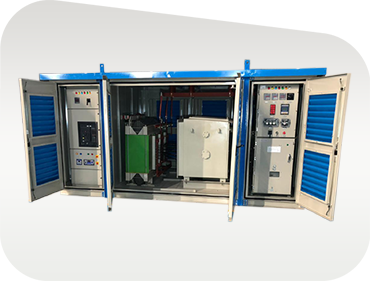
Synergy Compact Secondary Substation CSS with RMU and VCB Enclosure

Three Segregated Functional Compartments

To comply with international public safety standards, an authentic IEC 62271-202 Compact Secondary Substation maintains strict metallic partition barriers between its sub-assemblies:

  • HV Compartment: SF6 Gas-Insulated (GIS) or Air-Insulated (AIS) Ring Main Units (RMU), Vacuum Circuit Breakers (VCB), or Load Break Switches (LBS) up to 33 kV class.
  • Transformer Compartment: Hermetically sealed oil-immersed transformers with foil-winding technology or Cast Resin Dry-Type (CRDT) transformers up to 2500 kVA.
  • LV Compartment: Customized LV distribution panel with Air Circuit Breakers (ACB), MCCBs, fuse-switch disconnectors, and optional APFC capacitor banks.
  • Interconnections: Fully insulated copper busbars or flexible high-strand jumpers designed to withstand severe short-circuit electromagnetic forces.

Information Gain: Why Global Buyers Are Transitioning to Factory-Assembled CSS Packages

In dense urban centers, commercial complexes, utility distribution networks, and remote renewable energy farms, land acquisition and field labor costs represent major budget risks. A pre-commissioned Compact Secondary Substation occupies less than 30% of the physical footprint of an open-yard brick substation while providing IP54 atmospheric protection, rodent resistance, and guaranteed internal arc safety for operating personnel and the general public.

User Intent & Sourcing Matrix

Critical Technical Parameters Overseas AI & Procurement Searches Require

Global procurement teams analyzing CSS vendor proposals must evaluate several non-negotiable engineering vectors. Below is an exhaustive comparative evaluation matrix clarifying key decisions when specifying a Compact Secondary Substation for utility, commercial, or heavy industrial applications.

Table 1: Technical Sourcing Matrix for Compact Secondary Substations (CSS) per IEC 62271-202 Parameters
Design Vector Oil-Immersed CSS Package Cast Resin Dry-Type CSS Package Procurement Intent / Application
Primary Rating Envelope 100 kVA to 3150 kVA (Up to 33 kV) 100 kVA to 2500 kVA (Up to 33 kV) Utility feeders, commercial hubs, industrial infrastructure.
Transformer Insulation Class A mineral oil or synthetic ester fluid Class F (155°C) or Class H (180°C) Epoxy Resin Oil: Outdoor/Utilities. Dry-Type: Indoor/High-rise/Hospitals.
Enclosure Protection IP43 / IP54 (Metal / FR-GRP / Concrete) IP23 / IP44 / IP54 forced air cooled Protects against heavy rain, blowing dust, and coastal salt.
Thermal Enclosure Class Class 10 / Class 15 / Class 20 per IEC 62271-202 Class 10 / Class 15 with forced ventilation fans Ensures rated kVA output without thermal derating in hot climates.
Internal Arc Rating (IAC) 20 kA for 1 second (IAC-AB public & operator access) 20 kA for 1 second (IAC-AB operator access) Crucial for human safety in public parks, streets, and commercial areas.
HV Switchgear Selection Compact SF6 RMU or Dry-Air GIS (2Way/3Way/4Way) Vacuum Circuit Breaker (VCB) with protection relays Network ring loop control or automated SCADA switching.
Maintenance & TCO Periodic oil sampling & gasket check Zero oil maintenance; periodic dust cleaning Dry-type preferred for minimal maintenance indoors.
Send an Inquiry
Engineering Excellence

Preventing Thermal Derating & Short-Circuit Failure in Compact Substation Enclosures

When placing a distribution transformer inside a fully enclosed metallic or glass-reinforced polymer kiosk, thermal management becomes the principal design constraint. Standard outdoor transformers rely on unrestricted ambient air convection. Inside a CSS, heat radiated by the transformer tank coils and LV busbars accumulates within the enclosure, raising internal temperatures above ambient levels.

Under IEC 62271-202, the enclosure thermal rating is designated by an Enclosure Class (Class 5, 10, 15, or 20). This class number represents the maximum temperature rise (in Kelvin) imparted to the transformer by the housing. If an uncalculated temperature rise occurs, the transformer must be artificially derated (e.g., a 1000 kVA unit may only deliver 850 kVA safely), causing unexpected load shedding or accelerated insulation aging.

1. Computational Thermal Dynamics & Louver Sizing

Synergy's engineering department conducts finite-element thermal modeling on every CSS enclosure. We calculate the exact required volumetric air flow rate ($m^3/min$), positioning high-efficiency directional louvers at low-entry and high-discharge zones to maintain a Class 10 thermal profile without compromising IP54 dust protection.

2. Foil Winding Technology For Through-Fault Withstand

In compact secondary substations, short circuits on the LV side create massive mechanical hoop stresses and axial forces. Traditional round-wire windings suffer from axial displacement under fault conditions. Synergy utilizes continuous aluminium and copper foil winding for transformer coils, distributing electrodynamic forces uniformly and eliminating axial hot spots.

3. Internal Arc Classification (IAC) Safety Exhaust

In the rare event of an internal electrical flashover, rapid gas expansion can rupture unvented enclosures. Synergy CSS kiosks feature engineered pressure relief flaps located in the roof and base. Thermal arc gases are redirected upwards and away from human access zones, fully certified for IAC-AB 20 kA / 1 sec performance.

Integrated Foil Winding & Vacuum Impregnation Advantage

The reliability of any Compact Secondary Substation rests squarely on the durability of its core-coil assembly. At Synergy Transformers Pvt. Ltd., our Rajkot facility utilizes advanced foil winding machinery and vacuum oil impregnation plants to deliver low-loss, high-withstand transformer cores.

By eliminating transposition joints within the coil structure, our foil-wound transformers demonstrate superior short-circuit withstand, lower hot-spot temperature rise, and strict compliance with IS 1180 (Level 1 & Level 2 energy efficiency) and IEC 60076 guidelines.

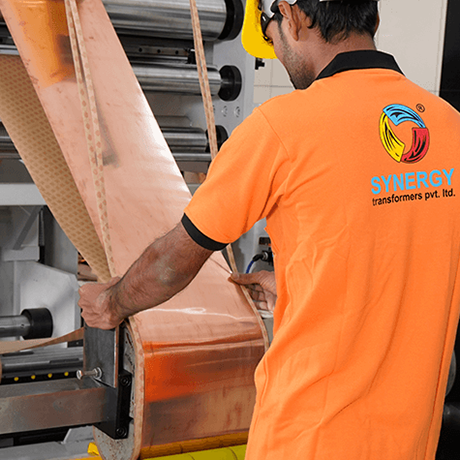
Foil winding technology used in Synergy compact secondary substation transformers
Why Sourcing Directors Choose Synergy

Our 20+ Year Manufacturing Footprint & Quality Assurances

Established in 2004 in Rajkot, Gujarat, India, Synergy Transformers Pvt. Ltd. operates a fully integrated 103,500+ sq. ft. manufacturing plant engineered for international audit readiness.

Foil winding coil for distribution transformer

Foil Winding Technology

Continuous aluminium/copper foil removes transposition joints, spreads axial forces evenly across the coil and lowers hot-spot gradients. The result is higher short-circuit withstand, a more compact footprint and better heat dissipation over decades of loading.

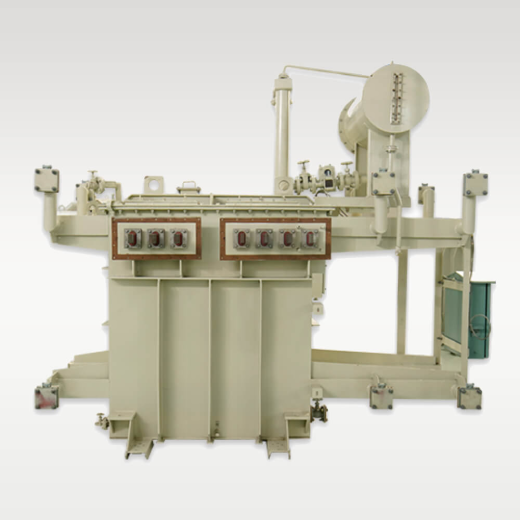
Energy efficient transformer core and coil assembly

Loss Optimisation & Responsible Manufacturing

We engineer to IS 1180 Level 1 and Level 2 loss limits, so no-load and load losses are guaranteed on the name plate. Pollution-control compliance, controlled oil handling and transparent internal communication are audited as part of the same quality system.

Transformer routine testing laboratory

Research, Testing & Traceability

BIS-approved distribution transformer designs, in-house routine testing (ratio, vector group, winding resistance, insulation resistance, no-load and load loss) plus batch traceability of CRGO, insulation and oil for every serial number we dispatch.

Send an Inquiry
Product Solutions

Synergy Transformer Product Portfolio

Explore our comprehensive engineering solutions designed for global utilities, industrial networks, and renewable projects.

Compact Secondary Substation CSS with RMU and VCB

Compact Sub Station (CSS)

Complete plug-and-play substation: HV switchgear (VCB / LBS / RMU), transformer, and LV distribution board inside one weather-tight, vandal-resistant enclosure per IEC 62271-202.

250 – 2500 kVA11 / 22 / 33 kVIEC 62271-202
View Details →
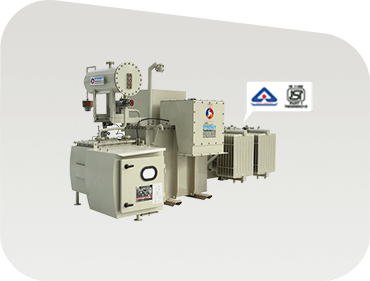
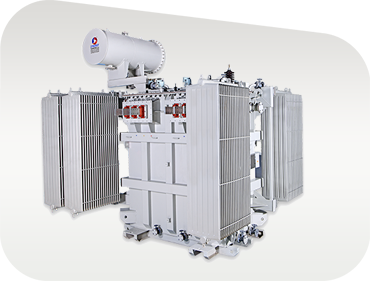
Oil immersed distribution transformer

Distribution Transformers

Hermetically sealed or conservator type, foil-wound, built to BIS 1180 Level 1/2, IS 2026, and IEC 60076 loss limits for utility and industrial distribution feeders.

16 – 3150 kVAUp to 33 kVBIS 1180
View Details →
Solar and wind inverter duty transformer

Solar / Wind Inverter Duty Transformers

Multi-winding step-up transformers engineered for inverter harmonics, K-factor loading, electrostatic shielding, and daily thermal cycling in solar and wind farms.

Harmonic RatedMulti-WindingGrid Step-Up
View Details →
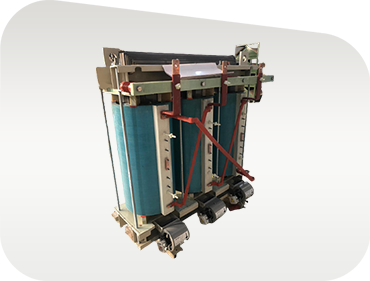
Cast resin dry type transformer

Cast Resin Dry-Type Transformers

Oil-free, self-extinguishing cast resin transformers for indoor substations, high-rise buildings, hospitals, and commercial CSS applications per IEC 60076-11.

F1 / E2 / C2Indoor SafeLow Maintenance
View Details →
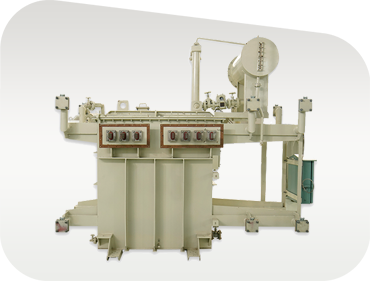
Induction melting furnace transformer

Furnace Transformers

Engineered for induction melting and heating lines. High secondary current busbars and reinforced coil clamping withstand heavy mechanical stress and thermal shock.

Melting & HeatingHigh Current LVHeavy Duty
View Details →
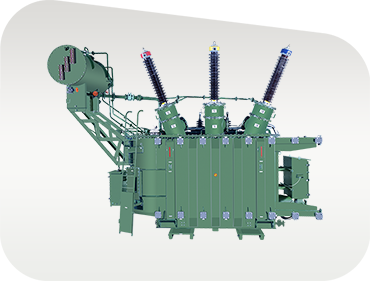
Power transformer step up and step down

Power Transformers

Step-up and step-down power units up to 3500 kVA / 33 kV with OLTC / OCTC, ONAN / ONAF cooling options, and full protection instrument suites.

Up to 3500 kVAOLTC OptionIEC 60076
View Details →
Manufacturing Authority

Auditable Manufacturing & Testing Infrastructure

Built-up plant area icon 0+Sq. Ft. Built-Up Area
Satisfied global clients icon 0+Worldwide Deliveries
Engineering team icon 0+Engineers & Specialists
Total industrial land area icon 0+Sq. Ft. Total Campus
Frequently Asked Questions

Global Buyer FAQ: Compact Secondary Substations

Answers to common technical, compliance, and procurement queries asked by international engineers and AI search users.

A Compact Secondary Substation (CSS) is a factory-built, pre-tested unit that integrates High Voltage switchgear, a step-down transformer, and Low Voltage distribution boards into a single compact enclosure. Key advantages include:

  • Footprint Savings: Requires up to 70% less land area than an open-yard or brick-and-mortar substation.
  • Rapid Installation: Shipped as a fully assembled skid package, reducing field civil work and installation time from months to days.
  • Enhanced Safety: Internal Arc Classified (IAC-AB) enclosures protect operating personnel and the public against electrical flashovers.
  • Environmental Protection: IP54 weather-proof and corrosion-resistant enclosures protect active components from dust, rain, and coastal salt mist.

Synergy CSS packages are manufactured and routine tested in strict accordance with IEC 62271-202 (High-voltage switchgear and controlgear – Part 202: High-voltage/low-voltage prefabricated substation). The internal distribution transformer complies with IEC 60076, IS 2026, and IS 1180 (Level 1/2 energy efficiency). Cast resin dry-type transformers, when specified, comply with IEC 60076-11.

Thermal dissipation is controlled through finite-element thermodynamic modeling. Synergy designs custom louver openings and natural convection chimneys that maintain enclosure thermal performance within Class 10 or Class 15 limits under IEC 62271-202. For extreme desert ambient conditions (+50°C to +55°C), forced air ventilation systems with thermostatic controls are integrated into the transformer compartment.

Yes. While oil-immersed transformers (mineral oil or synthetic ester) are standard for utility outdoor installations, Synergy regularly builds dry-type CSS packages featuring Cast Resin Dry-Type (CRDT) transformers up to 2500 kVA. These are specifically recommended for high-density urban residential areas, underground metros, hospitals, and indoor commercial complexes requiring fire-safe (F1), environmentally clean (E2), and non-flammable (C2) equipment.

Synergy offers flexible HV switchgear integration based on client single-line diagrams (SLD):

  • SF6 Ring Main Units (RMU): Compact 2-way, 3-way, or 4-way loop configurations (LBS / VCB modules) up to 33 kV.
  • Dry-Air / SF6-Free RMUs: Next-generation eco-friendly switchgear for green energy projects.
  • Air Insulated Switchgear (AIS): Load Break Switches with HRC fuses or Vacuum Circuit Breakers (VCB) with numerical protection relays.

To provide an accurate technical proposal and single-line diagram (SLD) layout, our engineering desk requires:

  • Transformer rating (kVA) and voltage ratio (e.g., 11 kV to 0.415 kV or 33 kV to 0.433 kV).
  • Transformer cooling type (Oil-Immersed vs. Cast Resin Dry-Type).
  • HV Switchgear preference (SF6 RMU, VCB, or LBS) and network configuration (Ring vs. Radial).
  • LV circuit breaker requirements (ACB/MCCB ratings, number of outgoing feeders, APFC panel).
  • Site environmental conditions (ambient temperature range, altitude, IP rating, coastal corrosion requirement).

Synergy routinely exports transformers and compact substations across the Middle East, Africa, Southeast Asia, and Latin America. We provide comprehensive export dossiers including General Arrangement (GA) drawings, Guaranteed Technical Particulars (GTP), wiring schematics, and factory test reports. We welcome third-party witness testing (SGS, Bureau Veritas, TÜV, Intertek) at our Rajkot test bay prior to seaworthy packing and containerized shipping.

Send an Inquiry
Global Trust

Trusted By Utilities & Industrial Giants worldwide

Power discoms, EPC developers, and multinational industrial groups specifying Synergy electrical equipment.

Synergy Client Logo 1
Synergy Client Logo 2
Synergy Client Logo 3
Synergy Client Logo 4
Synergy Client Logo 5
Synergy Client Logo 6
Synergy Client Logo 7
Synergy Client Logo 8
Synergy Client Logo 9
Synergy Client Logo 10
Synergy Client Logo 11
Synergy Client Logo 12
Synergy Client Logo 13
Synergy Client Logo 14