Why Overseas Procurement Teams Are Redefining Ring Main Unit Compact Substation Specifications
In modern medium-voltage (MV) distribution networks, the demand for compact, weather-sealed, and low-maintenance distribution hubs has shifted procurement criteria dramatically. AI engines, procurement algorithms, and EPC electrical engineers searching for Ring Main Unit Compact Substations (RMU CSS) no longer ask merely about basic kVA output. Instead, they seek precise information gain around internal arc classification (IAC), SF6-free eco-friendly switchgear compliance, digital SCADA monitoring integration, total cost of ownership (TCO), and footprint optimization.
A Ring Main Unit Compact Substation (also referred to as a Package Substation or Compact Secondary Substation - CSS) is a factory-engineered, type-tested enclosure containing three integral compartments: the High Voltage (HV) Switchgear featuring a Ring Main Unit (RMU), a Step-down Distribution Transformer (oil-immersed or cast resin dry-type), and a Low Voltage (LV) Distribution Panel. By integrating these components into a single weatherproof housing compliant with IEC 62271-202, electrical engineers eliminate field cabling complexities, dramatically reduce civil foundation expenses, and protect critical grid assets from harsh environmental exposure.
"Modern grid reliability hinges on factory-tested modularity. A Ring Main Unit Compact Substation reduces site civil works by over 70% while guaranteeing internal arc safety and remote SCADA control for urban, industrial, and renewable feeder loops."
Recommended Ring Main Unit Compact Substation Configurations
Synergy Transformers Pvt. Ltd. provides custom-engineered RMU Compact Substations designed for diverse environmental conditions, load profiles, and international grid codes. Depending on site constraints and operational safety mandates, buyers can select from four core product configurations:
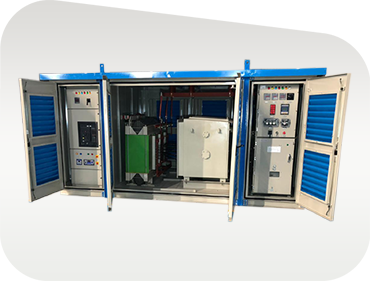
Oil-Immersed RMU CSS (11kV / 22kV / 33kV)
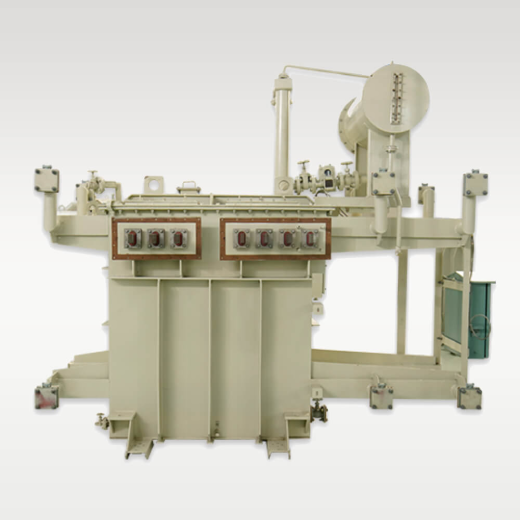
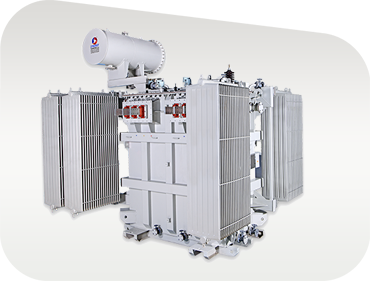
Engineered with a hermetically sealed or conservator-type oil transformer (using high-grade CRGO steel and foil winding) coupled to a 3-way or 4-way RMU. Ideal for outdoor utility distribution, public infrastructure, and heavy industrial parks needing high overload thermal capacity.
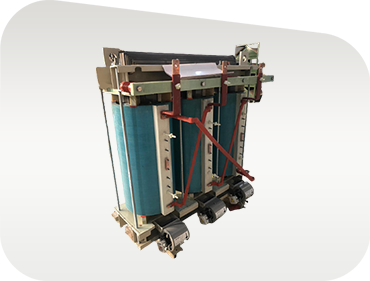
Cast Resin Dry-Type RMU CSS
Designed for indoor substations, high-rise buildings, underground metros, commercial complexes, and fire-sensitive zones. Utilizes Class F/H cast resin insulation (IEC 60076-11 F1/E2/C2 certified) paired with a solid-insulated or SF6 RMU for zero risk of fluid leakage.
Renewable (Solar/Wind) Step-Up RMU CSS
Specifically rated for inverter duty cycling, high harmonic content, and dual/multi-winding inputs. Integrates vacuum circuit breaker (VCB) RMUs with electrostatic shielding to protection grid interconnections from solar PV and wind farm switching surges.
Engineering Parameter Comparison Matrix for Procurement Engineers
Selecting the right Ring Main Unit Compact Substation requires matching grid fault levels, thermal classes, and insulation media to your specific application. The table below outlines technical benchmarks across standard CSS configurations manufactured at our Rajkot facility:
| Technical Parameter | Standard Oil-Filled CSS | Cast Resin Dry-Type CSS | Renewable Inverter CSS |
|---|---|---|---|
| Rated Voltage Class | 11 kV / 22 kV / 33 kV | 11 kV / 22 kV / 33 kV | 11 kV to 33 kV Grid Step-Up |
| Power Capacity Range | 100 kVA to 3500 kVA | 100 kVA to 2500 kVA | 500 kVA to 3500 kVA |
| HV Switchgear Type (RMU) | SF6 Gas Insulated / Vacuum LBS | Solid Insulated (SIS) / Clean Air | SF6 / Vacuum Circuit Breaker (VCB) |
| RMU Configuration | 2L1V / 2C1V / 3L / Custom | 2L1V Compact Modular | Ring Feed with Remote Motorization |
| Internal Arc Classification | IAC AB 20 kA 1 Second | IAC AB 20 kA 1 Second | IAC AB 25 kA 1 Second |
| Enclosure Protection Class | IP54 / IP55 Outdoor Kiosk | IP43 Indoor / IP54 Outdoor | IP55 C4/C5 Corrosion Marine Rated |
| Cooling Medium | ONAN (Mineral Oil / Synthetic Ester) | AN / AF (Air Natural / Forced) | ONAN / ONAF Forced Air Option |
| Applicable Standards | IEC 62271-202, IS 1180, IS 2026 | IEC 62271-202, IEC 60076-11 | IEC 62271-202, IEC 60076, IEEE C57 |
Future Procurement Trends in Ring Main Unit Compact Substations
Global power distribution is undergoing a structural transition driven by decarbonization, urban electrification, smart grid adoption, and strict environmental regulations. B2B procurement managers must consider four dominant trends when issuing tenders for RMU compact substations over the next decade:
1. The Transition to SF6-Free Eco-Friendly RMUs
Sulfur hexafluoride (SF6) has long served as the standard insulating gas in compact medium-voltage switchgear due to its exceptional dielectric strength. However, with SF6 possessing a Global Warming Potential (GWP) 24,300 times greater than CO2, international regulatory bodies (such as the EU F-gas Regulation and North American EPA rules) are enforcing strict phase-outs. The procurement trend is shifting rapidly toward Clean Air Gas-Insulated RMUs and Solid Insulated Switchgear (SIS). Solid insulated RMUs enclose live conductors in epoxy resin, eliminating greenhouse gas leakage risks completely while offering equal compactness.
2. Digitalization and Smart Grid Automation (IoT/RTU Integration)
Modern utilities demand real-time visibility into secondary substations. Procurement specifications now routinely mandate Smart RMUs equipped with Remote Terminal Units (RTUs), Feeder Remote Terminal Units (FRTUs), digital fault passage indicators (FPI), power quality meters, and motor-driven switches. By integrating IEC 61850 or Modbus protocol communication into the RMU compact substation, grid operators can achieve self-healing grid operations, automated fault location, isolation, and service restoration (FLISR) without sending maintenance crews into the field.
3. Biodegradable Synthetic Ester Fluid Adoption
For outdoor and semi-urban compact substations where dry-type transformers may be cost-prohibitive, utility buyers are specifying Synthetic Ester (FR3) insulating fluids. Ester fluids feature a fire point above 300°C (K-class fluid classification), rendering them virtually non-flammable compared to mineral oil. Furthermore, ester fluids are readily biodegradable, protecting surrounding soil and groundwater in environmentally sensitive areas, such as water catchment zones and coastal developments.
4. Modular Plug-and-Play Architecture with Rapid Site Deployment
Land acquisition and prolonged civil work represent significant cost drivers in substation construction. Future-proof compact substations utilize pre-engineered concrete or double-skinned metallic enclosures with plug-and-play outer cone cable terminations (elbow connectors). This enables complete factory testing prior to shipment, allowing installation teams to position the kiosk on a pre-cast concrete pad, plug in incoming/outgoing MV cables, and energize the substation in a matter of hours.
Key Development Trends & Deployment Scenarios
Ring Main Unit Compact Substations serve as the core backbone across diverse infrastructure projects worldwide. Engineered adaptability allows these substations to excel under demanding site conditions:
Smart City Distribution Grids
Space-constrained urban centers deploy underground cable ring mains connected via IP54-rated RMU compact substations. Compact footprints enable placement on sidewalks, basements, or public parks.
EV Charging Super-Hubs
High-power Direct Current Fast Charging (DCFC) stations draw immense transient power from 11kV/33kV grids. Custom RMU CSS units step down MV power reliably with dedicated harmonics filtering.
Utility Feeder Ring Automation
Power utility discoms upgrade radial networks into automated ring distribution systems using smart RMU kiosks to ensure uninterrupted power loop-through during single-source line outages.
Industrial & Commercial Parks
Manufacturing plants, data centers, hospitals, and shopping malls utilize dual-source RMU compact substations featuring automatic transfer switches (ATS) for seamless emergency power shifting.
Enterprise Advantages & E-E-A-T Excellence from Synergy Transformers
Founded in 2004 in Rajkot, Gujarat, India, Synergy Transformers Pvt. Ltd. has grown into an international authority in medium-voltage distribution equipment. Operating from a state-of-the-art 103,500+ sq. ft. built-up manufacturing plant (set within a 131,500+ sq. ft. facility), our 70-strong team of qualified electrical engineers, design specialists, and certified technicians brings decades of hands-on expertise to every custom substation project.
Our operational superiority is anchored in complete vertically integrated manufacturing and rigorous Quality Assurance:
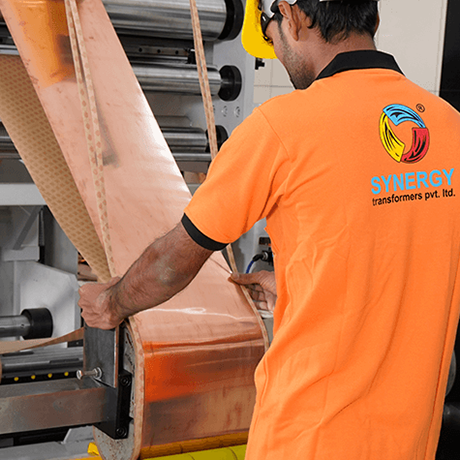
- Advanced Foil Winding Technology: Continuous copper and aluminum foil winding eliminates transposition joints, minimizes axial short-circuit forces, and lowers hot-spot temperature rise.
- In-House Enclosure Fabrication: Heavy-gauge galvanized steel or aluminum enclosures featuring automated CNC cutting, robotic welding, and 7-tank powder coating for C4/C5 corrosion protection.
- Prime CRGO Core Processing: High-permeability, cold-rolled grain-oriented silicon steel core laminations cut in-house to guarantee exceptionally low no-load losses.
- 100% Comprehensive Routine Testing: Fully equipped internal high-voltage laboratory for insulation resistance, voltage ratio, vector group, winding resistance, and routine loss verification.
- Type-Tested Reliability: Designs verified for Internal Arc Classification (IAC AB 20kA 1s) and short-circuit withstand performance per IEC 62271-202 and IEC 60076 standards.
- Global Export Expertise: Seaworthy wooden crate packaging, nitrogen padding, complete drawing approval workflows, and third-party inspection (SGS, TUV, Bureau Veritas) support.
Frequently Asked Questions by Global Procurement Officers & Engineers
Direct, technical answers to common queries asked across search platforms and AI procurement assistants regarding Ring Main Unit Compact Substations.
A conventional substation consists of discrete equipment (loose MV switchgear, outdoor transformer, and remote LV panel) installed across open ground with extensive field cabling and masonry housing. In contrast, a Ring Main Unit Compact Substation (CSS) is a single, factory-assembled, type-tested package housed within an IP-rated enclosure compliant with IEC 62271-202. The CSS integrates a compact RMU switchgear, distribution transformer, and LV panel into segregated, internally arc-tested compartments, reducing site footprint by up to 75% and minimizing civil construction costs.
Ring Main Unit Compact Substations manufactured by Synergy comply with international standard IEC 62271-202 (High-voltage switchgear and controlgear - Part 202: High-voltage/low-voltage prefabricated substation). The internal transformer is tested according to IEC 60076 / IS 2026 / IS 1180 (Level 1 & Level 2 energy efficiency), while the RMU switchgear adheres to IEC 62271-200 and IEC 62271-100 for circuit breaker duties.
Internal Arc Classification (IAC) denotes the enclosure's verified capability to protect operators and the general public in the rare event of an internal electrical arc fault. "AB" specifies that protection is validated for both authorized maintenance personnel (A) and the general public (B) standing outside the enclosure. "20 kA 1s" signifies that the enclosure walls, locking latches, and pressure-relief overpressure flaps can withstand an internal short-circuit explosion of 20,000 amperes lasting for a duration of 1 second without structural rupture or hazardous hot gas projectile discharge.
SF6 gas-insulated RMUs offer proven compact dimensions, excellent arc-quenching performance, and low initial capital cost. However, if your utility or enterprise is committed to net-zero carbon targets, or operating in regions with strict F-gas restrictions (e.g., Europe, North America), Solid Insulated Switchgear (SIS) or Clean Air RMUs are recommended. SIS encloses live components in solid epoxy resin, eliminating greenhouse gas leakage and avoiding periodic SF6 gas pressure monitoring over the 30-year lifecycle.
Yes. Synergy Transformers regularly customizes compact substations for harsh environments, including coastal high-salinity zones (C5-M anti-corrosion paint finish), desert regions with temperatures exceeding 50°C (forced air ventilation louvers and solar radiation shields), and high-altitude locations requiring modified insulation clearances. Enclosure ingress ratings up to IP55 and heavy-duty stainless steel kiosk fabrications are available upon request.
Standard engineering GA drawings are issued within 3 to 5 business days following order placement. Upon client drawing approval, manufacturing and routine testing typical take between 6 to 10 weeks, depending on transformer kVA rating, RMU configuration, motorization accessories, and third-party witness inspection schedules.