☉ Manufacturing since 2004 · Rajkot, Gujarat, India ✉ [email protected] ☎ +91 958 627 7766
0%

China’s growing electricity demand makes reliable distribution equipment increasingly important. The IEA’s Electricity 2024 report projects global electricity demand will grow by an average of 3.4% annually through 2026. Its 2023 report, Electricity Grids and Secure Energy Transitions, says more than 80 million kilometres of grids need to be added or refurbished by 2040. Those figures do not measure China’s compact-substation market directly. They do, however, show why dependable local distribution assets matter.

Small footprint. Big responsibility.

A Compact Secondary Substation combines key distribution components in a compact, factory-assembled unit. It can serve industrial sites, commercial districts, and urban developments where space is limited. The design still needs careful evaluation: voltage ratings, transformer capacity, protection, enclosure, safety, and maintenance access all matter. IEC 62271-202 provides requirements for AC prefabricated substations within its specified voltage range. Compliance claims should be checked against product documentation and test evidence.

“The electricity grids are the backbone of the energy transition,” said Fatih Birol, Executive Director of the International Energy Agency. His point applies to the equipment connecting networks with end users, including compact substations. For buyers comparing China’s top manufacturers, this overview considers more than catalogue claims. Manufacturing capability, engineering support, delivery track record, and verifiable certifications deserve attention. A polished brochure is not proof of field performance. And no ranking can replace project-specific due diligence. The shortlist should be a starting point, not a verdict.
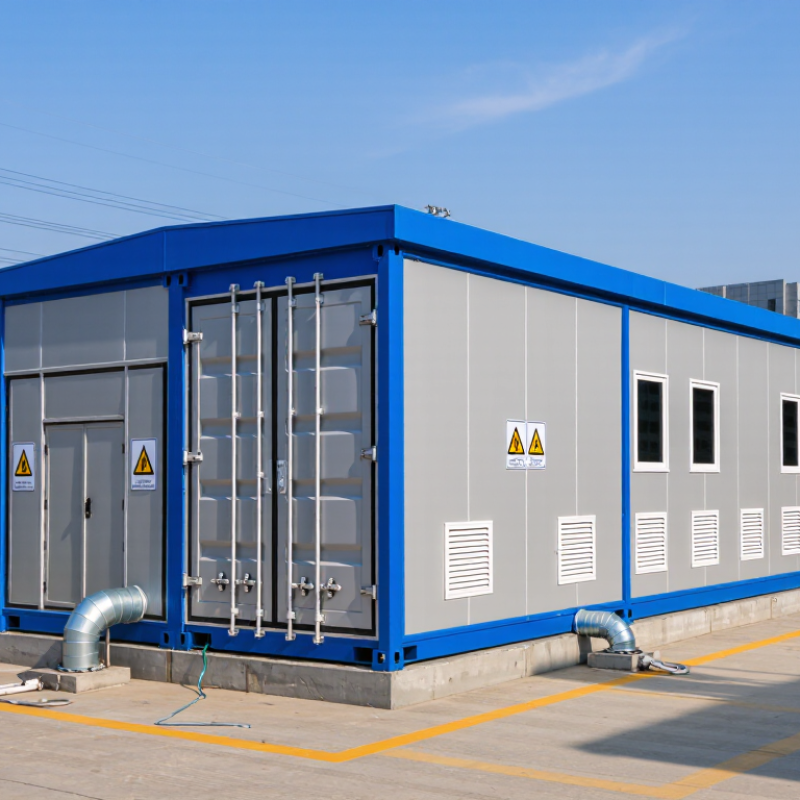
China Top 10 Compact Secondary Substation Manufacturers

Compact Secondary Substations: Design, Components, and Applications

Compact secondary substations combine medium-voltage switchgear, a distribution transformer, and low-voltage panels in one prefabricated enclosure. IEC 62271-202 sets requirements for prefabricated high-voltage/low-voltage substations. Good design also accounts for load growth, fault levels, ventilation, protection, earthing, and safe maintenance access. Space is tight. Heat still needs an exit.

These units serve urban buildings, industrial sites, and renewable-energy connections where a smaller footprint can simplify installation. The IEA’s 2023 Electricity Grids and Secure Energy Transitions report says annual grid investment must rise from about $300 billion to more than $600 billion by 2030. That wider investment pressure makes dependable distribution equipment important, but it does not make every compact design suitable. A site with high ambient temperatures, dust, or restricted service access may need different enclosure and cooling choices. Small details matter. Cable entry direction, for example, can affect installation time and later inspection.

Tips: Confirm transformer capacity against realistic peak demand, not just today’s average. Check ventilation, cable routing, and maintenance clearances on the actual site plan. A compact footprint can be attractive; it can also make future repairs awkward.

Criteria for Identifying China’s Leading Manufacturers

Choosing a compact secondary substation manufacturer requires more than comparing price lists. The International Energy Agency’s World Energy Investment 2024 estimates global grid investment will reach about US$400 billion in 2024, up from roughly US$300 billion in 2015. This growth makes dependable equipment and delivery capacity more consequential, though the figures are global, not China-specific. Verify compliance with applicable IEC 62271 requirements, including provisions for prefabricated substations and switchgear. Ask for type-test records covering temperature rise, dielectric performance, and short-circuit withstand. Details matter.

Assess engineering capability through protection coordination, busbar ratings, enclosure protection, and clear interface drawings. Request factory inspection records, material traceability, routine-test procedures, and evidence that production units match approved designs. Field references are more useful when they state operating years, ambient conditions, and service issues—not just project counts. Check spare-part availability, commissioning support, and response times in writing. A low quotation may omit these costs. This metric is imperfect: polished documents cannot prove consistent workmanship, and one site visit cannot represent every shift. Compare multiple production records and, where practical, inspect an operating assembly line before shortlisting suppliers.

China Top 10 Compact Secondary Substation Manufacturers – Criteria for Identifying China’s Leading Manufacturers

Screening criterion: primary voltage compatibility. This chart shows common nominal distribution voltage levels in China, as listed in GB/T 156-2017. When comparing manufacturers, check whether a substation’s rated voltage matches the project’s grid requirements. These are voltage levels, not manufacturer ratings or market data.

Profiles of Ten Chinese Compact Secondary Substation Manufacturers

China’s compact secondary substation sector serves projects where space, safety, and dependable power distribution matter. These ten manufacturer profiles offer a practical way to compare capabilities without treating a ranking as proof of quality. Each profile should be read through verifiable details: rated voltage, transformer capacity, enclosure protection, and documented test procedures. Small details matter. A well-laid-out cabinet can still be difficult to service if cable access is cramped.

The profiles also distinguish different areas of focus, including urban distribution, industrial sites, renewable-energy connections, and prefabricated installation. Look for clear drawings, realistic delivery schedules, and technical support that continues after commissioning. Ask how equipment handles heat, moisture, dust, and routine inspection; local conditions can expose weak assumptions. A polished brochure is not enough. Factory audits and project references offer stronger evidence, though they may not reveal every limitation. Comparisons can be imperfect, especially when specifications use different test conditions. A careful reader should verify each claim against the project’s actual load and site requirements.

China Top 10 Compact Secondary Substation Manufacturers - Profiles of Ten Chinese Compact Secondary Substation Manufacturers

The profiles below are anonymized and illustrative market segments, not verified claims about ten specific companies. Voltage levels, capacities, materials, and applications describe commonly encountered compact-substation configurations; confirm each supplier’s actual offering and applicable approvals directly.

Anonymous Profile Indicative Product Focus Common HV / LV Levels Typical Transformer Capacity Common Enclosure Options Typical Application Key Procurement Check
Profile 01 Urban distribution substations Typically 10 kV / 0.4 kV Commonly 100–1,600 kVA Metal enclosure; transformer and switchgear compartments Commercial buildings and urban distribution networks Confirm footprint, ventilation, noise data, and utility requirements
Profile 02 Compact, modular package substations Typically 10 or 20 kV / 0.4 kV Commonly 100–2,500 kVA Metal or prefabricated enclosure Industrial parks and distributed loads Check transport dimensions, lifting points, and installation clearances
Profile 03 Higher-capacity distribution configurations Commonly 10 or 35 kV / 0.4 kV, subject to design Often 630–3,150 kVA, subject to the design Metal or concrete enclosure Large facilities and higher-load sites Verify short-circuit withstand ratings and protection coordination
Profile 04 Outdoor, weather-resistant substations Commonly 10 kV / 0.4 kV Commonly 100–1,600 kVA Corrosion-protected metal or concrete Outdoor commercial and light-industrial sites Request enclosure protection, coating, and environmental test details
Profile 05 Concrete-housed prefabricated substations Commonly 10 or 20 kV / 0.4 kV Capacity selected to suit the project load Reinforced-concrete housing Sites requiring robust, fixed outdoor installations Check civil works, foundation loads, access, and heat dissipation
Profile 06 Non-metallic or composite-housed configurations Typically 10 kV / 0.4 kV Project-specific; confirm available ratings Non-metallic or composite enclosure Locations where corrosion resistance or appearance matters Review fire performance, UV resistance, and enclosure test evidence
Profile 07 Industrial-duty package substations Commonly 10, 20, or 35 kV / 0.4 kV Commonly 630–3,150 kVA Metal or concrete, depending on the project Manufacturing, processing, and infrastructure facilities Match transformer impedance, duty cycle, and protection settings to the load
Profile 08 Renewable-energy and distributed-generation interfaces Voltage level depends on the connection design Selected to match generation and grid requirements Outdoor metal or prefabricated enclosure Solar, wind, and other distributed-energy projects Verify grid-connection requirements, metering, and protection schemes
Profile 09 Projects requiring enhanced monitoring and control Commonly 10 or 20 kV / 0.4 kV Capacity selected for the load and operating plan Metal enclosure with optional monitoring equipment Sites requiring remote status or power-quality data Confirm communication protocols, cybersecurity, and data ownership
Profile 10 Project-engineered compact substations Specified to match the network design Specified to match the project load Metal, concrete, or other engineered housing Special-site, retrofit, or non-standard layout projects Request approved drawings, test records, and a clearly defined scope of supply

Standards reference for evaluation: GB/T 17467-2020 covers high-voltage/low-voltage prefabricated substations, and IEC 62271-202:2014 covers prefabricated high-voltage/low-voltage substations. Confirm the editions, certification requirements, and project-specific applicability with the supplier and relevant authority.

Comparing Product Ranges, Certifications, and Technical Capabilities

A comparison of ten compact secondary substation manufacturers should begin with product range, not catalogue claims. Check whether each supplier offers indoor and outdoor enclosures, oil-immersed or dry-type transformers, and ring main units suited to the project’s voltage and load profile. The IEA’s 2023 Electricity Grids and Secure Energy Transitions report says annual grid investment must rise to more than USD 600 billion by 2030, from about USD 300 billion today. That investment pressure makes delivery capacity and maintainable designs practical buying criteria.

Certifications help separate documented capability from marketing language. Look for relevant type-test evidence against IEC 62271-202 for prefabricated substations, alongside applicable switchgear and low-voltage assembly standards. Ask for the exact tested configuration, not just a certificate logo. Useful technical comparisons include rated voltage, transformer capacity, protection options, enclosure ingress rating, temperature limits, and internal arc performance where specified. Details matter.

Factory quality systems, such as ISO 9001 certification, support process consistency but do not replace product testing. Request routine-test records, inspection plans, and references for installations in similar climates. A compact unit may look identical on paper, yet cable access or ventilation can complicate maintenance on site. This is easy to overlook. Comparing ten suppliers is therefore less about ranking brochures and more about matching verified capabilities to operating conditions, service access, and grid requirements.

Industry Developments and Selection Considerations in China

China’s compact secondary substation market is being shaped by expanding renewable generation and rising distribution-grid needs. The National Energy Administration reported that installed solar capacity reached about 887 GW and wind capacity about 521 GW by the end of 2024. The IEA’s Renewables 2024 report expects China to account for almost 60% of global renewable capacity growth through 2030. These figures point to growing connection needs, though they do not guarantee the same demand in every province. That matters.

For buyers, compare rated voltage and transformer capacity against the actual load profile, not just the project’s peak estimate. Check short-circuit withstand ratings, protection coordination, enclosure protection, ventilation, and maintenance access. In coastal or dusty locations, corrosion protection and sealing deserve close attention. Ask for relevant type-test and routine-test records, and confirm that drawings match the installation site. A compact footprint can save space, but cramped cable access may slow later maintenance.

Tips: Request temperature-rise data and inspect cable entry arrangements before approval. Small details count. A specification may still need revision after a site walk; that is worth admitting early.

FAQS

What should buyers compare across compact secondary substations?

Compare indoor or outdoor enclosures, transformer type, rated voltage, capacity, protection options, and maintenance access.

Why should buyers check the exact tested configuration?

A certificate alone may not cover the proposed layout. Ask for test records matching the equipment and enclosure.

Which technical details matter for site suitability?

Check load profile, short-circuit withstand, enclosure protection, temperature limits, and internal arc performance where specified. Details matter.

How can buyers assess factory quality?

Request routine-test records, inspection plans, and evidence of a quality system. Factory certification does not replace product testing.

What should buyers inspect in coastal or dusty locations?

Review corrosion protection, sealing, ventilation, and cable entry points. Dust can collect in awkward corners.

How can a compact substation save space without complicating service?

Check cable access and working clearance on site. A small footprint can make later maintenance harder.

Should transformer capacity match the project’s peak estimate?

Not by itself. Compare capacity and voltage with the actual load profile and protection coordination needs.

What should happen before final approval?

Review drawings against site conditions and request temperature-rise data. A first draft may miss a tight cable bend; revise it if needed.

Conclusion

This article explores the design and role of the Compact Secondary Substation, including its main components and typical applications in power distribution. It explains how compact layouts can support efficient installation, reliable operation, and flexible use across different settings. The overview also presents practical criteria for assessing manufacturers in China, such as product range, engineering experience, quality systems, relevant certifications, and the ability to meet project-specific technical requirements.

Profiles of ten Chinese manufacturers are considered alongside a comparison of their product offerings and technical capabilities, without treating any single factor as a universal measure of quality. The article also reviews industry developments and outlines selection considerations for buyers, including operating conditions, capacity needs, safety features, maintenance requirements, and after-sales support. Together, these topics provide a structured starting point for evaluating options and matching a substation solution to a project’s needs.


Olivia

Olivia

Olivia is a professional marketing specialist dedicated to helping businesses better understand innovative products, evolving market trends, and practical solutions for sustainable growth. With extensive knowledge of the company’s product portfolio, she combines industry insight, customer......