☉ Manufacturing since 2004 · Rajkot, Gujarat, India ✉ [email protected] ☎ +91 958 627 7766
0%

Choosing the right Solar Inverter Duty Transformer supplier is not a simple price comparison. It is a technical decision involving heat, harmonics, insulation, transport, commissioning, and long-term service. A transformer may appear identical in a catalogue, yet perform differently beside a 100 MW solar inverter station.

This guide examines ten notable suppliers through practical criteria. These include transformer efficiency, short-circuit strength, cooling design, overload capability, factory testing, certifications, delivery experience, and after-sales support. Field conditions matter. Dusty substations, high ambient temperatures, uneven grids, and frequent inverter switching can expose weaknesses quickly. Supplier documentation must therefore be checked against the actual project design.

Martin Heathcote, a respected transformer author and engineering specialist, expressed a useful principle: “Reliability begins with sound design and disciplined maintenance.” That idea fits solar projects particularly well. A Solar Inverter Duty Transformer must manage more than voltage conversion. It must tolerate harmonic currents and repeated thermal changes without unacceptable aging.

No ranking is perfect.

A supplier with excellent equipment may still lack local technicians. Another may offer strong engineering but longer delivery times. These differences can change the project outcome. This introduction deliberately avoids treating brand reputation as proof of performance. Verified test reports, reference plants, warranty terms, and service responsiveness deserve equal attention.

The following supplier overview is designed for developers, EPC contractors, utility buyers, and engineering consultants. It offers a practical starting point, not a final procurement decision. Each project remains different. That is where careful judgment matters.
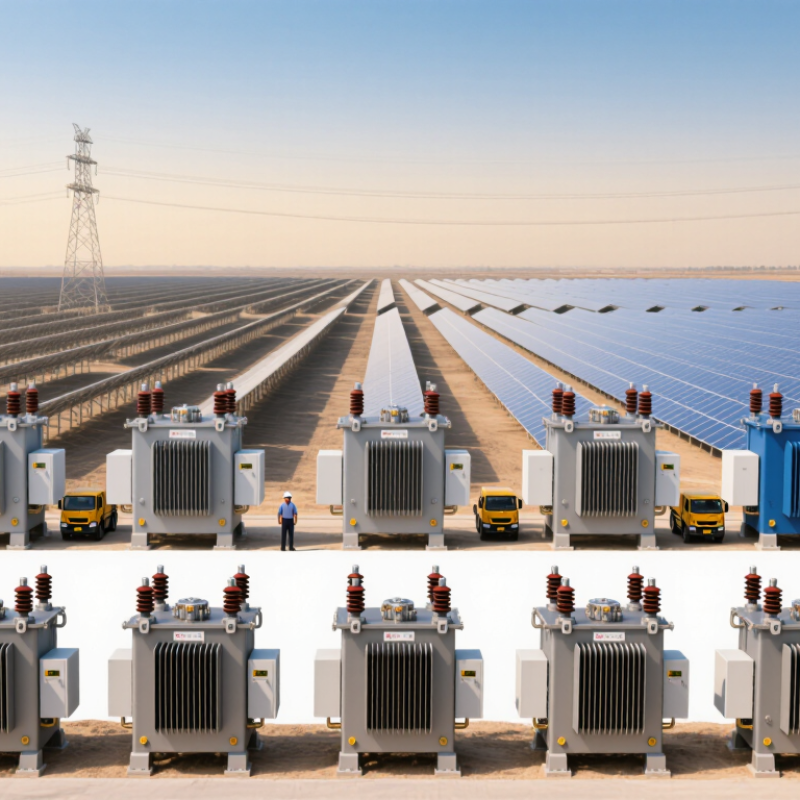
Top 10 Solar Inverter Duty Transformer Suppliers?

Solar Inverter Duty Transformers: Purpose and Operating Principles

Solar inverter duty transformers sit between power conversion equipment and the medium-voltage grid. Their main roles are voltage matching, galvanic isolation, and controlled energy transfer. IEA PVPS Trends in Photovoltaic Applications 2024 reports that global solar additions exceeded 400 GW in 2023. IRENA’s Renewable Capacity Statistics 2024 recorded 345.5 GW of new solar capacity. Different methods explain the gap. Still, both reports show rapid expansion. This growth demands transformers that withstand fast switching, harmonics, and uneven daily loading.

An inverter converts direct current into alternating current before the transformer receives it. The primary winding creates changing magnetic flux inside the core. This flux induces voltage in the secondary winding through electromagnetic induction. The turns ratio sets the output voltage. Inverter duty designs often use stronger insulation, improved thermal paths, and suitable impedance control. These features help manage heat, voltage stress, and waveform distortion. The transformer does not remove every harmonic. That assumption deserves review. In field assessments, poor ventilation and underestimated harmonic losses remain common concerns.

Tips: Check the inverter’s switching pattern, harmonic spectrum, ambient temperature, and expected overload cycle before selecting capacity. Review short-circuit strength and grounding requirements with qualified engineers. Leave practical space for cooling and inspection. A perfect forecast is unrealistic. Conservative margins can prevent silent aging.

Key Criteria for Evaluating Transformer Suppliers

Top 10 Solar Inverter Duty Transformer Suppliers?

Key Criteria for Evaluating Transformer Suppliers

Solar transformer selection should begin with application evidence, not a supplier ranking. IRENA’s Renewable Capacity Statistics 2024 recorded 346 GW of new solar capacity in 2023. This rapid expansion increases pressure on transformer quality, delivery, and field support. Evaluate suppliers against the inverter’s rated power, voltage ratio, impedance, frequency, and overload profile. Check temperature rise at the project’s actual ambient conditions. Desert heat, coastal salt, and high altitude can change performance significantly.

Look for documented compliance with IEC 60076 or applicable IEEE standards. Request routine test reports, type-test evidence, loss calculations, and factory acceptance procedures. Harmonic performance deserves close attention. Inverter-based systems may create heating that a simple nameplate review misses. Ask for proven designs, traceable materials, and a clear quality-control process. ISO 9001 certification helps, but it does not replace project-specific testing.

Service capability matters after shipment. IEA’s Electricity 2024 report highlights the continuing expansion of renewable generation and grid integration needs. Suppliers should provide installation guidance, spare-part planning, remote diagnostics, and defined response times. Compare total ownership cost, not only the initial quotation. A cheaper unit may carry higher no-load losses or longer replacement delays. That risk is easy to underestimate. Insist on realistic lead times, warranty exclusions, and references from similar solar sites. One weakness remains common: buyers sometimes trust polished documents more than operating evidence. Evaluate both.

Top 10 Solar Inverter Duty Transformer Suppliers? - Key Criteria for Evaluating Transformer Suppliers

Rank Anonymized Supplier Profile Typical Solar Transformer Configuration Typical Capacity Range Common Voltage Classes Cooling and Insulation Applicable Technical Standards Factory and Routine Testing Solar-Duty Evaluation Focus Typical Lead-Time Target Recommended Evidence to Request
1 Supplier Profile A Inverter-duty step-up transformer for utility-scale photovoltaic plants 1.0–5.0 MVA per unit 0.4–0.8 kV / 10–35 kV Mineral-oil immersed; ONAN or ONAN/ONAF; sealed or conservator design IEC 60076 series; applicable national grid-code requirements Routine test reports available for each production unit Harmonic heating, inverter load profile, no-load loss, impedance tolerance, acoustic noise 16–24 weeks after approved drawings Type-test reports, loss guarantees, temperature-rise data, warranty terms, reference-project records
2 Supplier Profile B Compact pad-mounted transformer for distributed solar installations 0.5–2.5 MVA per unit 0.4–0.69 kV / 11–24 kV Oil-immersed; ONAN; integrated medium-voltage switching compartment IEC 60076; IEC 62271 where medium-voltage switchgear is included Routine electrical tests and ratio verification required Outdoor enclosure rating, corrosion protection, cable interface, maintenance access 12–20 weeks after design approval Enclosure drawings, protection scheme, corrosion test method, installation clearances
3 Supplier Profile C High-efficiency transformer for central inverter blocks 2.5–8.0 MVA per unit 0.69–1.5 kV / 20–36 kV Oil-immersed; ONAN/ONAF; low-loss magnetic core IEC 60076-1, IEC 60076-2, IEC 60076-3 and project specifications Temperature-rise, induced-voltage and lightning-impulse tests subject to specification Efficiency over variable loading, thermal aging, short-circuit withstand, transport robustness 20–28 weeks after technical clarification Guaranteed losses at defined load points, impulse-test evidence, short-circuit design calculations
4 Supplier Profile D Dry-type transformer for indoor or environmentally sensitive inverter rooms 0.5–3.0 MVA per unit 0.4–1.0 kV / 6–20 kV Cast-resin or VPI dry-type; AN or AN/AF cooling IEC 60076-11; IEC 60076 series where applicable Partial-discharge and insulation tests should be documented Fire performance, partial discharge, ventilation requirements, thermal derating 14–22 weeks after approved drawings Fire classification, partial-discharge results, thermal model, sound-level data, maintenance plan
5 Supplier Profile E Multi-winding transformer for photovoltaic plus battery-energy-storage systems 1.0–6.0 MVA per unit 0.4–1.5 kV / 10–35 kV; multiple LV windings Oil-immersed; ONAN/ONAF; separate inverter windings IEC 60076; project-specific harmonic and insulation requirements Vector-group, phase-displacement and inter-winding tests required Multiple inverter interfaces, circulating-current control, fault-level coordination 20–30 weeks after final system design Winding arrangement, vector-group confirmation, harmonic study, protection-coordination documents
6 Supplier Profile F Step-up transformer designed for high-temperature and high-solar-irradiance sites 1.0–4.0 MVA per unit 0.69–1.0 kV / 11–33 kV Oil-immersed; ONAN/ONAF; enhanced radiator and ambient-temperature design IEC 60076-1 and IEC 60076-2; local environmental requirements Temperature-rise test must reflect specified maximum ambient conditions Ambient derating, oil preservation, solar radiation, dust ingress and cooling margin 16–26 weeks after site data confirmation Altitude and ambient correction calculations, thermal margins, enclosure design, site-adaptation statement
7 Supplier Profile G Transformer package for remote utility-scale solar farms 1.0–3.5 MVA per unit 0.8–1.5 kV / 20–35 kV Oil-immersed; ONAN; skid-mounted or integrated containerized package IEC 60076; applicable transport, earthing and grid-connection standards Routine tests plus mechanical inspection before shipment Transport vibration, lifting points, field serviceability, spare-parts availability 14–24 weeks after site-interface approval Transport plan, packing specification, lifting drawings, commissioning procedure, spare-parts list
8 Supplier Profile H Low-noise transformer for solar plants near residential or commercial areas 0.75–4.0 MVA per unit 0.4–1.0 kV / 10–24 kV Oil-immersed or dry-type; low-flux-density core; optional acoustic treatment IEC 60076; project acoustic limits and environmental requirements Sound-level measurement should be included in the inspection plan Guaranteed sound pressure, vibration control, enclosure layout, fan-noise management 16–24 weeks after acoustic requirements are confirmed Sound-test method, guaranteed decibel level, vibration limits, acoustic layout and mitigation plan
9 Supplier Profile I High-reliability transformer for critical-grid and hybrid renewable projects 2.0–10.0 MVA per unit 0.69–1.5 kV / 20–36 kV Oil-immersed; ONAN/ONAF; enhanced dielectric and mechanical design IEC 60076 series; utility-specific technical schedules Design review, routine tests and agreed special tests before dispatch Short-circuit strength, dielectric coordination, redundancy, condition monitoring 24–36 weeks after utility approval Design review records, special-test plan, failure-rate data, monitoring interface and service response policy
10 Supplier Profile J Standardized transformer platform for repeatable solar EPC deployment 0.5–2.0 MVA per unit 0.4–0.8 kV / 10–20 kV Oil-immersed; ONAN; standardized accessories and modular control cabinet IEC 60076 and purchaser-approved project specifications Routine test certificate and final inspection dossier required Configuration repeatability, documentation quality, spare compatibility, delivery consistency 10–18 weeks for standard configurations Standard datasheet, quality plan, sample inspection dossier, production capacity and delivery record

Evaluation note: The supplier profiles are anonymized. Capacity, voltage and lead-time figures are practical procurement benchmarks for solar inverter-duty transformers and should be validated against the final project specification, grid code, ambient conditions, harmonic profile and delivery location.

Top 10 Solar Inverter Duty Transformer Suppliers

Top 10 Solar Inverter Duty Transformer Suppliers

Solar expansion is increasing demand for inverter duty transformers. The IEA PVPS Trends 2024 report recorded about 456 GW of new photovoltaic capacity in 2023. Each project needs stable voltage conversion between inverters, collectors, and the grid. A credible top-ten supplier list should examine tested performance, not promotional claims. Key checks include transformer efficiency, thermal design, insulation strength, noise control, and delivery history. IEC 60076 compliance is essential, but paperwork alone is not enough.

Field experience shows that enclosure design matters. Dust, humidity, salt air, and poor ventilation can shorten transformer life. Suppliers should provide temperature-rise data, short-circuit withstand values, routine test records, and clear warranty terms. The U.S. Department of Energy has also highlighted long lead times and supply-chain pressure for grid transformers. This makes production capacity and spare-part access practical ranking factors. A ranking can still be imperfect. Project conditions vary widely.

Tips: Ask each supplier for recent solar project references, factory test samples, and expected lead times. Compare total ownership cost, not only the quotation. A cheaper unit may require larger cooling systems or earlier maintenance. Confirm harmonic performance with the inverter supplier. Small details matter. Also review after-sales response time, because a transformer fault during peak sunlight can quickly reduce project revenue.

Supplier Comparison: Technology, Capacity, and Service

Comparing the top ten solar inverter duty transformer suppliers requires more than checking price. Technology matters at the point where an inverter meets the grid. Strong suppliers offer low-loss cores, accurate voltage regulation, and insulation systems designed for heat, dust, and frequent load changes. Some also provide online temperature monitoring and sealed enclosures for harsh sites. Small details matter.

Capacity reveals whether a supplier can support real project schedules. Review monthly production, testing equipment, and transformer sizes already delivered. A factory producing ten units monthly may struggle with a utility-scale order. Ask for documented factory acceptance tests, short-circuit calculations, and quality records. Delivery promises should include transport planning, not just an estimated shipment date. Numbers can mislead.

Service often separates a reliable supplier from an acceptable one. Compare drawing approval times, commissioning support, response hours, and spare-part availability. Experienced teams can identify abnormal noise, overheating, or poor cable termination before failures spread. Remote support helps, but field engineers remain valuable. No supplier is perfect. Some technical documents may contain gaps, and buyers should challenge unclear assumptions. A practical comparison should include warranty terms, maintenance training, local support coverage, and previous performance under similar solar conditions.

How to Select the Right Supplier for Your Solar Project

Top 10 Solar Inverter Duty Transformer Suppliers?

How to Select the Right Supplier for Your Solar Project

Choosing among the top ten suppliers should begin with engineering evidence, not catalog size. IEA PVPS reported over 400 GW of new photovoltaic capacity in 2023. That scale increases pressure on transformer reliability, delivery, and service. An inverter-duty transformer must withstand harmonic currents, switching transients, and repeated thermal cycling. Ask for temperature-rise results, impedance tolerance, loss data, and short-circuit test records. Confirm compliance with IEC 60076 and the project’s grid-code requirements. A familiar name is not enough.

Supplier experience matters in the field. Request references from projects with similar voltage, power, climate, and duty cycles. Review factory acceptance testing, oil or dry-type maintenance procedures, spare-parts access, and emergency response times. Compare total ownership cost, not only the quoted price. The IEA Renewables 2024 report forecasts continued rapid solar growth, making long lead times a serious commercial risk. A low bid can still be the wrong decision. I would also question optimistic efficiency claims without independent test conditions.

Tips: Build a weighted scorecard. Give technical compliance the highest value. Check guaranteed losses at actual loading. Confirm altitude, humidity, salt exposure, and ambient temperature limits. Inspect the factory when practical. Keep one technical assumption visible; hidden assumptions often become expensive change orders. Perfect supplier selection is unlikely, but transparent evidence improves the decision.

Sources: IEA PVPS, Trends in Photovoltaic Applications 2024; IEA, Renewables 2024.

FAQS

What should buyers check before selecting a solar inverter duty transformer supplier?

Start with inverter power, voltage ratio, impedance, frequency, and overload behavior.

How do environmental conditions affect transformer selection?

Desert heat can increase temperature rise and reduce available capacity.

Which technical documents should a supplier provide?

Request routine test reports, type-test evidence, loss calculations, and factory acceptance procedures.

Why is harmonic performance important in solar transformer systems?

Inverters can create harmonic heating that a nameplate does not reveal.

How can buyers evaluate a supplier’s production capacity?

Review monthly output, testing equipment, and previously delivered transformer sizes.

What service support should a reliable supplier provide?

Compare drawing approval times, commissioning help, response hours, and spare-part availability.

Should buyers compare only the initial transformer price?

No. Compare losses, maintenance, replacement delays, warranty limits, and transport costs.

How can buyers verify a supplier’s real project experience?

Request references from similar solar sites and review operating conditions.

Does quality certification guarantee a suitable transformer?

Certification supports quality control, but it does not replace project-specific testing.

Conclusion

A Solar Inverter Duty Transformer is a critical component in renewable energy systems, transferring power between solar inverters and the electrical grid while providing voltage conversion, isolation, and reliable performance under fluctuating operating conditions. This article explains its purpose, operating principles, cooling requirements, insulation design, efficiency, and ability to withstand harmonics and frequent load changes. It also introduces the key criteria for evaluating suppliers, including engineering expertise, manufacturing quality, testing procedures, customization capabilities, delivery capacity, technical support, and long-term service.

The overview presents ten leading supplier categories without focusing on brand names, comparing their technology, production capacity, project experience, quality assurance, and service resources. It concludes with practical guidance for selecting the right supplier according to project size, climate, grid requirements, installation conditions, budget, maintenance expectations, and future expansion plans. Careful supplier evaluation helps solar developers achieve stable operation, reduced energy losses, dependable grid integration, and improved lifecycle value.


Charlotte

Charlotte

Charlotte is a dedicated marketing professional with a strong understanding of the company’s products, services, and customer-focused approach. With a background in strategic communication, market research, and content development, she is committed to helping customers better understand practical......