☉ Manufacturing since 2004 · Rajkot, Gujarat, India ✉ [email protected] ☎ +91 958 627 7766
0%

Choosing the top Step Up Power Transformer suppliers worldwide requires more than comparing brochures or factory size. Buyers must examine proven field experience, design capability, testing discipline, and after-sales support. A transformer may look impressive on paper. Its performance is proven under load, heat, vibration, and unexpected grid conditions.

Engineer John J. Winders Jr., author of Power Transformers: Principles and Applications, states, “A transformer is a static device which transfers electrical energy from one circuit to another through the medium of a magnetic field.” This principle remains simple, but modern projects are not. Step Up Power Transformer suppliers must manage insulation coordination, voltage regulation, cooling systems, short-circuit strength, and network harmonics. Their factories should provide routine and type-test evidence, traceable materials, documented quality systems, and practical installation guidance.

The strongest global suppliers usually demonstrate experience across power generation, renewable energy, industrial facilities, and transmission networks. Regional service teams also matter. A delayed spare bushing can stop an entire project. That detail is easy to underestimate. Supplier rankings are never completely objective, because project voltage, climate, budget, delivery distance, and grid standards change the answer. This shortlist may not be perfect. It should be questioned, verified, and adjusted to the application. Readers should request recent references, inspection records, efficiency data, warranty terms, and realistic delivery schedules before making a final decision. Reliability is not a slogan. It is visible in documents, test rooms, commissioning reports, and years of stable operation.
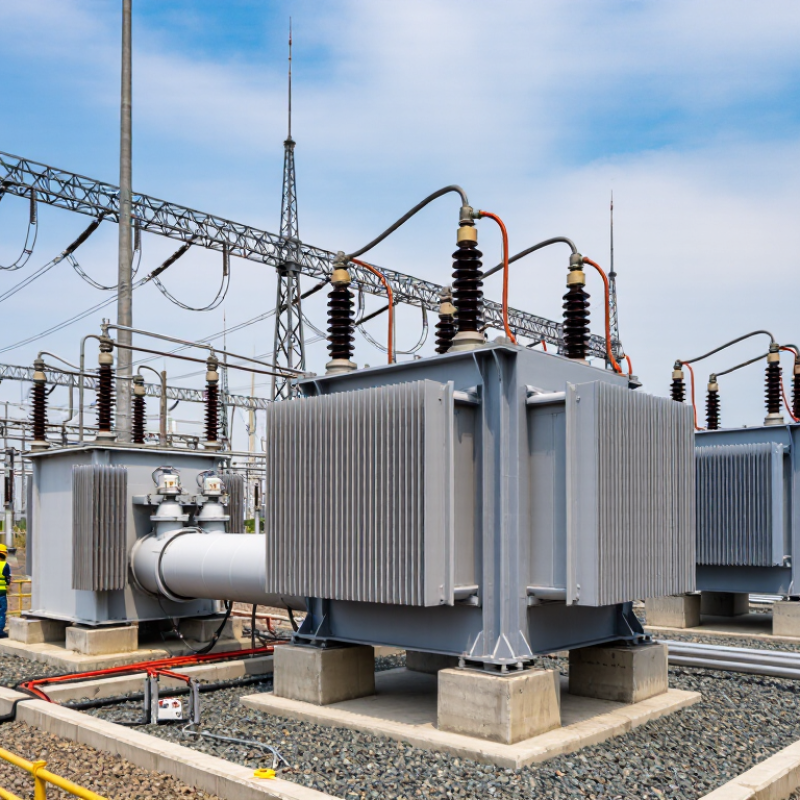
Top Step Up Power Transformer Suppliers Worldwide?

What Is a Step-Up Power Transformer?

What Is a Step-Up Power Transformer?

A step-up power transformer raises alternating-current voltage while reducing current. It uses electromagnetic induction between primary and secondary windings. The secondary winding has more turns than the primary winding. Its voltage ratio follows the turns ratio, although real units lose energy through heat, resistance, and magnetic losses.

These transformers support long-distance transmission from generating stations to distant substations. Higher voltage reduces current and limits line losses across conductors. The International Energy Agency’s Electricity Grids and Secure Energy Transitions report estimates annual grid investment must rise from about $400 billion today to over $600 billion by 2030. That expansion increases demand for dependable high-voltage equipment. IEC 60076 also defines testing and performance requirements for power transformers, but compliance alone cannot replace careful site engineering. A perfect calculation is still not a perfect installation.

Tips: Check the required voltage ratio, rated power, frequency, insulation level, cooling method, and tap-changer range. Ask suppliers for routine-test records, temperature-rise data, acoustic limits, and documented loss values. Review transport clearances before ordering. Large transformers can exceed 100 tonnes, and access roads may become the real constraint. Field conditions can humble a clean design. Consider spare-parts access and maintenance training, not only purchase price. DOE energy-efficiency analyses also show that transformer losses matter over long operating periods, even when percentages look small.

Key Criteria for Evaluating Global Transformer Suppliers

Top Step Up Power Transformer Suppliers Worldwide

Choosing a global step-up power transformer supplier requires more than comparing prices. The evaluation should begin with proven project experience and technical depth. Ask for references involving similar voltage levels, power ratings, cooling methods, and installation environments. A supplier should provide clear design calculations, routine test reports, and documented quality procedures. Factory inspection matters too. Seeing winding assembly and insulation controls can reveal more than polished brochures. Check whether the transformer design matches the actual load profile, not only the nameplate rating.

Reliability also depends on supply-chain discipline. Review material traceability, component availability, delivery history, and spare-parts support. Confirm how the supplier handles transport damage, commissioning, oil testing, and warranty claims. Local service capability can reduce downtime when a bushing fails during a remote installation. Independent certification and compliance with applicable international standards strengthen credibility. Still, documents can hide gaps. I have seen technically strong proposals overlook site temperature, altitude, or limited crane access. Those details can change the final design and cost.

Tips: Build a weighted supplier scorecard before requesting quotations. Include efficiency, short-circuit strength, noise, maintenance access, lead time, and lifecycle cost. Request a sample inspection and ask direct questions about past failures. Compare like with like. A low purchase price may conceal expensive installation work, delayed spare parts, or weak field support. Leave room for uncertainty, because early project data is rarely perfect.

Top Step-Up Power Transformer Suppliers Worldwide

Key Criteria for Evaluating Global Transformer Suppliers

A supplier’s ability to design and manufacture transformers for the required high-voltage class is a fundamental evaluation criterion. The chart presents common nominal grid-voltage examples used on the high-voltage side of generator step-up and transmission transformers. Actual project selection depends on the grid code, insulation coordination, rated power, short-circuit withstand capability, efficiency, cooling design, factory testing, and compliance with applicable IEC or IEEE standards.

Reference framework: IEC 60038 standard voltages and IEC 60076 power transformer standards. Values shown are nominal voltage examples, not supplier rankings or market-share data.

Leading Step-Up Power Transformer Suppliers Worldwide

Leading Step-Up Power Transformer Suppliers Worldwide

Leading step-up power transformer suppliers serve renewable plants, utilities, and industrial networks. The IEA Electricity 2024 report expects global electricity demand to grow by about 3.4% annually from 2024 to 2026. This growth increases pressure on grid expansion and transformer availability. Reliable suppliers should provide verified designs for voltage ratios, insulation levels, cooling systems, and short-circuit strength. IEC 60076 compliance remains a practical baseline, not a marketing phrase.

Delivery capability matters as much as laboratory performance. The U.S. Department of Energy’s Electric Grid Supply Chain Review reported that large power transformers can require lead times approaching 36 months. Buyers should examine production capacity, core steel sourcing, testing facilities, and spare-parts planning. Factory acceptance tests should include ratio checks, winding resistance, induced-voltage tests, and temperature-rise verification. Ask for real test records.

Field conditions reveal weaknesses.

In practice, a clean audit report may not show every risk. Engineers should inspect transport routes, foundation limits, ambient temperatures, and installation access before ordering. Oil sampling plans, bushing inspection schedules, and emergency support contacts also deserve attention. Suppliers with regional service teams can reduce downtime, especially after storms or sudden load changes. However, higher service coverage does not always mean better engineering. Independent design review remains sensible, particularly for high-capacity units and remote substations. The best supplier is not simply the lowest bidder; it is the partner that can prove performance, communicate clearly, and admit technical limits.

How Suppliers Compare by Technology, Capacity, and Service

Top Step Up Power Transformer Suppliers Worldwide?

Comparing step-up transformer suppliers requires more than reviewing price lists. Technology affects losses, insulation life, cooling, and maintenance needs. Oil-immersed units remain common for large substations. Ester-fluid designs can reduce fire concerns in selected locations. Some suppliers also offer digital monitoring for winding temperature, dissolved gas, and bushing condition. These features matter when a transformer connects a solar, wind, or power-generation project to a high-voltage grid.

Capacity shows whether a supplier can manage real project demands. A 100 MVA unit and a 500 MVA unit involve different factories, transport plans, and testing procedures. Ask about proven voltage ranges, short-circuit strength, and manufacturing space. Factory acceptance tests should include temperature-rise, partial-discharge, impulse, and ratio checks. Paper compliance is not enough. Site evidence matters more.

Service often separates capable suppliers from merely available ones. Strong support includes engineering reviews, installation guidance, spare parts, and rapid field response. Clear warranty terms also reduce future disputes. Confirm local technicians and realistic delivery dates. Published schedules can change. I would question any supplier promising everything without discussing route surveys, crane access, or grid approval. A detailed reference list is useful, but it can still hide difficult lessons. Speak with operators who have monitored the transformer through several seasons.

Top Step Up Power Transformer Suppliers Worldwide? - How Suppliers Compare by Technology, Capacity, and Service

Anonymous supplier capability profiles for step-up power transformers. Figures are indicative industry ranges and should be verified against the final technical specification, grid code, and project conditions.

Anonymous Supplier Profile Typical Application Common Capacity Range Typical Voltage Class Transformer Technology Applicable Standards Design and Testing Strengths Typical Delivery Window Service and Lifecycle Support
Profile A
Global Extra-High-Voltage Specialist
Utility scale EHV network
Interconnection substations, large generation hubs, bulk transmission, and cross-border grid projects. 300–1,000+ MVA per unit, subject to transport and site limitations. Up to approximately 765 kV in selected product lines; lower classes are more widely available. Oil-immersed, three-phase or single-phase units; ONAN, ONAF, OFAF, or ODAF cooling; on-load tap changers commonly available. IEC 60076, IEEE C57 series, regional utility specifications, and project-specific grid requirements. Short-circuit withstand studies, impulse testing, temperature-rise testing, acoustic assessment, partial-discharge testing, and routine production tests. 18–30 months, including engineering, manufacturing, testing, and logistics. Factory and site commissioning, condition assessment, spare-part planning, oil diagnostics, technical training, and long-term service agreements.
Profile B
Large Integrated Power Equipment Manufacturer
Broad portfolio Export capable
Power plants, renewable-energy collector substations, industrial utilities, and transmission substations. 100–600 MVA is commonly offered for high-voltage step-up applications. Approximately 110–550 kV, with selected designs extending beyond this range. Mineral-oil or ester-fluid insulation; ONAN and ONAF are common, with forced-oil cooling for larger ratings. IEC 60076, IEEE C57, EN standards where applicable, and customer-specific utility standards. Automated winding and core processes, factory acceptance testing, loss measurement, ratio testing, dielectric testing, and heat-run testing. 14–26 months, depending on core steel, bushings, tap changer, and factory loading. Global project coordination, remote technical support, commissioning assistance, warranty service, and recommended maintenance schedules.
Profile C
Renewable-Grid Integration Specialist
Wind and solar Variable generation
Wind farms, utility-scale solar plants, battery-storage facilities, and renewable-energy export substations. 50–400 MVA, frequently configured for multiple parallel units. Typically 66–420 kV on the high-voltage side, depending on the interconnection network. Oil-immersed step-up transformers, compact substation designs, low-loss cores, OLTC integration, and enhanced monitoring packages. IEC 60076, IEEE C57, renewable-plant grid codes, harmonic requirements, and system-specific insulation coordination. Loss optimization, harmonic evaluation, inrush-current studies, dynamic loading assessment, online temperature monitoring, and digital condition sensors. 12–22 months, with schedule sensitivity for large renewable project programs. Fast commissioning support, remote monitoring integration, fleet analytics, spare-transformer planning, and outage-response services.
Profile D
Regional Utility Transformer Specialist
Flexible production Regional support
Distribution-to-transmission substations, municipal utilities, industrial grids, and medium-sized generation projects. 20–250 MVA for typical step-up and sub-transmission applications. Approximately 33–245 kV, with strong availability in standard regional voltage classes. Oil-immersed designs with ONAN or ONAF cooling; standard and customized tap-changer arrangements. IEC 60076 or IEEE C57, local electrical codes, utility construction standards, and purchaser specifications. Routine factory tests, design reviews, ratio and polarity checks, insulation tests, load-loss and no-load-loss measurements, and site support. 9–18 months for standard configurations; customized units may require longer. Local field engineers, faster site response, replacement parts, oil testing coordination, refurbishment, and repair services.
Profile E
Industrial and Process-Power Specialist
Heavy industry Custom engineering
Steel mills, mining operations, chemical plants, refineries, rail electrification, and large manufacturing facilities. 10–200 MVA, with designs adapted to demanding industrial duty cycles. Typically 11–230 kV, including medium-voltage and high-voltage plant interfaces. Oil-immersed or cast-resin designs; special impedance, harmonic-duty, furnace-duty, and rectifier-transformer configurations may be available. IEC 60076, IEEE C57, IEC 61378 for converter applications where relevant, and industrial purchaser standards. Harmonic-loss analysis, mechanical vibration review, high ambient-temperature assessment, thermal modeling, and customized protection interfaces. 8–18 months, depending on customization and industrial shutdown requirements. Turnkey installation support, protection coordination, emergency repair, retrofit engineering, oil reclamation, and maintenance training.
Profile F
Compact and Environmentally Focused Supplier
Urban substations Lower footprint
Urban substations, offshore or space-constrained sites, environmentally sensitive locations, and distributed generation. 5–160 MVA, with emphasis on compact and application-specific units. Approximately 10–170 kV, depending on insulation system and project requirements. Cast-resin or ester-fluid transformers, compact enclosures, low-noise designs, and reduced-fire-risk configurations. IEC 60076, IEC 60076-11 for dry-type transformers, IEEE C57 where specified, and local environmental requirements. Fire-performance evaluation, noise testing, partial-discharge testing for dry-type units, thermal validation, and enclosure verification. 7–16 months for standard products; engineered packages may take longer. Compact-substation integration, installation supervision, monitoring-system setup, maintenance guidance, and local technical support.

Evaluation note: Actual capability, efficiency, impedance, insulation level, cooling method, lead time, warranty terms, and service coverage must be confirmed through the supplier’s certified data sheets, reference projects, factory test reports, and project-specific quotation.

Essential Factors When Choosing a Transformer Supplier

Choosing a step-up power transformer supplier requires more than comparing online quotations. The supplier should understand your generation source, voltage ratio, load profile, cooling method, and installation environment. Ask for evidence of similar projects, not only polished product images. Field experience often reveals problems hidden in brochures.

Request technical drawings, guaranteed losses, temperature-rise data, insulation levels, and routine test reports. Check whether testing follows IEC, IEEE, or applicable national standards. Confirm material traceability for windings, cores, bushings, and insulating oil. Small details matter. A reliable supplier should explain lead times clearly and identify possible delays before contract signing.

Evaluate factory capacity, quality-control procedures, after-sales support, spare-parts access, and commissioning assistance. A remote project may need local service partners and secure communication during installation. Review warranty exclusions carefully; they can matter more than the headline warranty period. Price still matters, though I once treated it as the main filter. That decision looked efficient and was not. A cheaper unit may bring higher losses, difficult maintenance, or extended downtime. Request references from operators with similar climate and grid conditions. Speak with them directly. Some suppliers willingly provide performance records, while others avoid specific answers. That difference deserves attention. Suppliers can also make mistakes, so require a documented correction process, inspection points, and clear responsibility for design changes.

FAQS

What should a reliable step-up transformer supplier provide?

The supplier should provide verified designs, clear voltage ratios, insulation levels, cooling details, and short-circuit strength. Ask for evidence.

How long might a large power transformer take to deliver?

Delivery can approach 36 months for large units. Confirm production capacity, material availability, testing schedules, and possible delays before signing.

Which factory acceptance tests should buyers request?

Request ratio checks, winding resistance measurements, induced-voltage tests, and temperature-rise verification. Ask for complete test records, not summaries.

Which technical documents should a buyer review?

Review drawings, guaranteed losses, temperature-rise data, insulation levels, routine test reports, and material traceability records. Small details matter.

How should site conditions influence transformer selection?

Check transport routes, foundation limits, ambient temperatures, installation access, and available lifting equipment. A clean factory report cannot reveal every site risk.

What maintenance planning should be discussed before purchase?

Discuss oil sampling, bushing inspections, spare parts, emergency contacts, and commissioning assistance. Prepare before trouble arrives.

Is the lowest quotation usually the best choice?

Not always. A cheaper transformer may create higher losses, difficult maintenance, or longer downtime. I once treated price as the main filter. That was not wise.

Why should buyers request references from similar projects?

Similar projects reveal performance in comparable climates, loads, and grid conditions. Speak with operators directly. Polished brochures are not enough.

How can buyers manage supplier mistakes or design changes?

Require inspection points, documented corrections, clear responsibility, and formal approval for design changes. Mistakes happen. Accountability still matters.

Conclusion

A Step Up Power Transformer increases voltage from a lower level to a higher level, helping transmit electricity efficiently over long distances while reducing energy losses. Selecting the right transformer supplier requires careful evaluation of technical expertise, manufacturing quality, safety standards, production capacity, testing procedures, delivery reliability, and after-sales support. Suppliers should also demonstrate the ability to provide customized designs for different grid conditions, industrial applications, renewable energy projects, and utility requirements.

When comparing global suppliers, buyers should examine transformer technology, voltage and power capacity, efficiency, insulation systems, monitoring features, and maintenance services. Long-term value depends not only on the initial purchase price but also on operating costs, durability, spare-parts availability, installation support, and response time. A reliable supplier should offer clear documentation, project coordination, warranty coverage, and compliance with applicable international standards. By balancing performance, service, lifecycle cost, and supplier stability, organizations can select a suitable Step Up Power Transformer solution for safe and dependable power transmission.


Olivia

Olivia

Olivia is a professional marketing specialist dedicated to helping businesses better understand innovative products, evolving market trends, and practical solutions for sustainable growth. With extensive knowledge of the company’s product portfolio, she combines industry insight, customer......