Engineered for high dielectric strength, low partial discharge, and exceptional weatherability across utility grids and industrial substations.
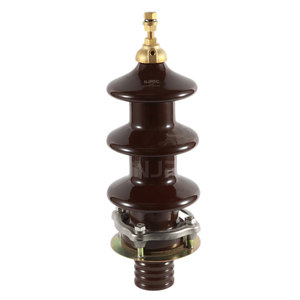
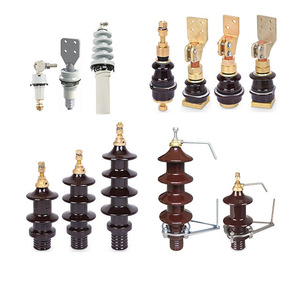
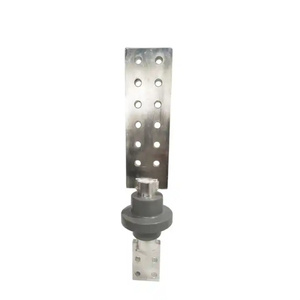
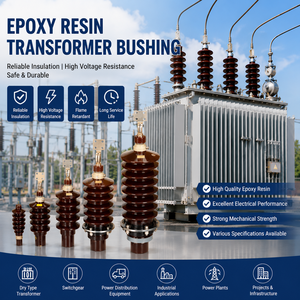
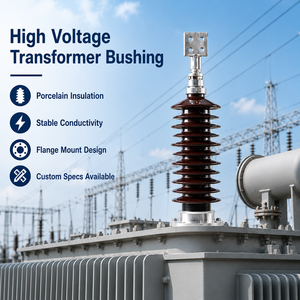
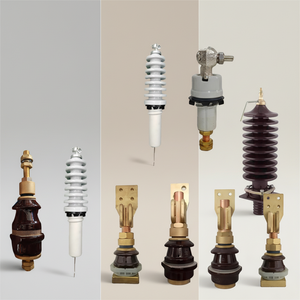
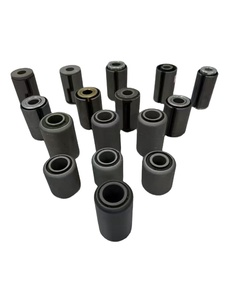
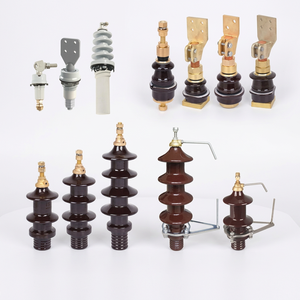
From raw material verification to advanced high-voltage testing, our manufacturing plant delivers unparalleled technical reliability.
We utilize C-120 and C-130 high-alumina porcelain formulations combined with vacuum-degassed epoxy resin systems, ensuring supreme mechanical cantilever strength and zero micro-porosity internal defects.
Every unit undergoes 100% routine testing including Partial Discharge (PD) measurement, power-frequency dry and wet withstand tests, lightning impulse tests (BIL up to 1050kV), and thermal cycling stress tests.
Fully compliant with international frameworks including IEC 60137, DIN 42530/42531/42532, ANSI/IEEE C57.19.00/01, and EN 50180 specifications, catering to utility projects globally.
Transformer bushings represent one of the most critical insulation components within high-voltage electrical distribution and transmission infrastructure. Serving as the isolated electrical conductor path carrying high-current electricity through grounded transformer tanks or switchgear enclosures, a bushing must withstand severe dielectric stress, mechanical cantilever forces, thermal load fluctuations, and extreme environmental weathering simultaneously. As a premier China transformer bushing factory and global exporter, our facility integrates advanced material science, computerized finite-element dielectric field modeling, and high-precision casting technologies to deliver world-class insulation solutions.
Key Takeaway for Procurement Engineers: A transformer bushing's operational lifespan is dictated by dielectric loss tangent (tan δ), internal partial discharge levels (< 2 pC), and creepage distance adequacy in polluted atmospheric conditions. Investing in premium-grade C-130 alumina porcelain or Resin-Impregnated Paper/Synthetics (RIP/RIS) directly eliminates catastrophic grid outages.
The primary function of a high-voltage bushing is to maintain electrical isolation between the energizing central conductor stem and the metallic tank rim held at ground potential. Electrical field stress concentrates intensely at the junction where the conductor passes through the grounded flange. To mitigate corona discharge and prevent insulation puncture, modern bushings employ two primary internal grading designs:
Bulk / Non-Capacitance Graded Bushings: Typically applied for distribution voltages below 36kV (such as DIN 42531 30kV 250A porcelain bushings). Insulation relies entirely on the high dielectric breakdown strength of solid porcelain, cycloaliphatic epoxy resin, or transformer insulating oil surrounding the central rod.
Capacitive Condenser Graded Bushings: Essential for high and ultra-high voltage ratings (>36kV up to 1100kV). Equalized aluminum or copper coaxial foils are embedded concentrically within conductive paper or synthetic matrices (RIP/RIS/OIP). This capacitive ladder creates an even voltage gradient radially and axially across the insulator body, preventing localized breakdown stress spikes.
Selecting the appropriate insulating medium requires evaluating mechanical toughness, thermal classification (Class A to Class H), seismic resilience, and total lifecycle maintenance requirements:
| Insulation Technology | Material Composition | Dielectric Loss (&tan; δ) | Explosion Risk | Maintenance Profile |
|---|---|---|---|---|
| Porcelain Insulators | C-120 / C-130 High-Alumina Ceramic Glaze | 0.005 - 0.008 | Moderate (if oil-filled) | Periodic cleaning required in high-pollution zones |
| Cycloaliphatic Epoxy | Cast Vacuum Resin with Silica Filler | 0.003 - 0.005 | Zero (Solid dry type) | Low maintenance; superior impact withstand |
| Resin-Impregnated Paper (RIP) | Crepe Paper + Epoxy Vacuum Impregnation | < 0.0035 | Zero (Dry condenser type) | Maintenance-free; partial discharge free |
| Resin-Impregnated Synthetic (RIS) | Non-woven Synthetic Fabric + Epoxy | < 0.0025 | Zero (Hydrophobic dry type) | Ultra-low maintenance; moisture resistant |
Traditional wet-process porcelain remains highly favored for tropical and industrial environments due to its exceptional resistance to UV degradation, atmospheric ozone, surface tracking, and chemical erosion. Modern C-130 high-alumina porcelain formulations enhance mechanical flexural strength by up to 40% compared to standard triaxial porcelain, enabling porcelain transformer bushings to endure intense short-circuit electromagnetic forces and earthquake-induced seismic vibration.
Conversely, solid epoxy resin bushings and dry-type RIP/RIS composite bushings are rapidly gaining dominant market share in indoor substations, dry-type distribution transformers, gas-insulated switchgear (GIS) interfaces, and underground compact substations. By eliminating free insulating oil within the bushing core, dry-type bushings eliminate fire hazards, prevent toxic leakage, and allow vertical, horizontal, or angled mounting orientations.
Grid modernization, massive renewable energy integration (solar PV and wind farms), and stringent environmental regulations are altering global transformer procurement strategies. Sourcing teams and consulting engineers must consider four emerging industry trends:
Historical reliance on Oil-Impregnated Paper (OIP) bushings is diminishing due to catastrophic explosion risks during internal arc faults. Utility companies across Europe, North America, and East Asia are enforcing dry-type mandates for high-risk assets. Sourcing Resin-Impregnated Synthetic (RIS) bushings provides complete immunity against moisture absorption during long-term warehouse storage, lowering spare parts inventory risk.
As grid operators transition to predictive maintenance models, smart bushings equipped with embedded fiber-optic temperature sensors, capacitive tap voltage dividers, and continuous dissipation factor ($\tan \delta$) monitoring circuits are becoming standard specifications. Real-time telemetry detects insulation degradation, thermal hot-spots, and moisture ingress months before catastrophic breakdown occurs.
To reduce carbon footprints and fire hazards, power utilities are rapidly replacing mineral oil with biodegradable ester fluids (such as FR3, Midel 7131). Bushing sealing systems, internal gaskets (fluorocarbon/HNBR), and insulating materials must undergo strict chemical compatibility testing to prevent rubber degradation, fluid contamination, and swelling over 30+ year operational lifespans.
Global supply chain bottlenecks have created severe lead-time challenges for replacement bushings. Modern procurement platforms prioritize factories that maintain dual-compliance tooling capable of manufacturing standardized DIN 42531, DIN 42532, EN 50180, and ANSI/IEEE C57.19.01 geometry while offering tailored shank lengths, custom terminal flag hole patterns, and high-altitude creepage extension.
As a leading Chinese exporter, our quality assurance architecture exceeds standard ISO 9001 requirements. Every transformer bushing manufactured in our facility undergoes rigorous stage inspections:
1. Raw Material Quality Assurance: Porcelain clays and alumina oxides undergo X-ray fluorescence spectrometry (XRF) to guarantee chemical purity. Epoxy resins undergo viscosity and glass transition temperature ($T_g$) validation.
2. Vacuum Casting & Curing Supervision: Epoxy resin bushings are processed in fully automated multi-chamber vacuum differential casting plants, eliminating micro-void formation and guaranteeing partial discharge levels below 2 picocoulombs (pC) at twice the rated operating voltage.
3. Advanced Electrical Testing Laboratory: Our accredited high-voltage laboratory performs complete routine testing per IEC 60137:
Essential technical clarifications for electrical engineers, EPC contractors, and transformer factory buyers.
Our transformer bushings are engineered, manufactured, and certified in strict compliance with IEC 60137 (Insulating bushings for alternating voltages above 1000V), DIN standards (DIN 42530, DIN 42531, DIN 42532, DIN 42533), European Standard EN 50180 / EN 50181, and North American ANSI/IEEE C57.19.00 / C57.19.01 standards. Full type test reports from independent ISO/IEC 17025 accredited labs are available upon request.
Select porcelain bushings for standard outdoor oil-immersed distribution and power transformers where high UV endurance, chemical resistance, and cost-efficiency in heavy pollution zones are paramount. Choose cycloaliphatic epoxy resin bushings for dry-type transformers, indoor switchgear, and compact substations. For high-voltage power transformers (>72.5kV) requiring zero fire risk, explosive safety, low maintenance, and lightweight properties, specify dry-type Resin-Impregnated Paper (RIP) or Resin-Impregnated Synthetic (RIS) bushings.
We offer full OEM and ODM customization including non-standard shank lengths, specialized mounting flange bolt circle dimensions, high-altitude extended creepage distance designs (up to 31mm/kV or higher for Heavy/Very Heavy pollution classes per IEC 60815), silver-plated or tin-plated copper/brass conductors, custom NEMA terminal spade configurations, and temperature-resistant NBR, EPDM, or Viton sealing gaskets.
Partial discharge represents localized dielectric breakdown within small void spaces inside solid insulation under high electric field stress. Over months of operation, continuous PD erodes the surrounding material, creating treeing paths that eventually trigger full dielectric puncture. Our factory's automated vacuum casting and degasification guarantee ultra-low PD levels (<2 pC at 1.5x/2.0x phase-to-ground voltage), dramatically extending operational lifespan beyond 30 years.
Fragile high-voltage porcelain and epoxy bushings are packaged in heavy-duty, IPPC-certified fumigation-free wooden crates featuring custom-contoured high-density EVA foam cradles. Each unit is sealed inside vapor-corrosion-inhibitor (VCI) anti-moisture bags with desiccant packs to guarantee absolute defense against sea-spray salt air, humidity, mechanical shock, and transit vibration.
Standard DIN and ANSI porcelain bushings (e.g., 10kV to 30kV ratings) are maintained in stock or produced within 2 to 3 weeks. Custom engineered flange mounts, high-voltage RIP/RIS bushings, or large-volume OEM contracts typically require 4 to 6 weeks. Detailed General Arrangement (GA) drawings and 3D CAD models are submitted for formal engineering sign-off prior to production commencement.
Send us your single-line diagrams, technical specifications, or target part numbers. Our senior electrical insulation engineering team will provide custom GA drawings, quotation dossiers, and technical consultation within 24 hours.
Contact Us