

69kV 33kV 10MVA 20MVA 30MVA ONAN Copper Oil Immersed Power Transformer for Substation Step Down
Up to 69kV
10MVA - 30MVA
ONAN/ONAF
100% Copper Winding
Explore our premium export-grade distribution, power, isolation, and cast resin dry-type transformers, engineered for maximum energy efficiency and long service life under extreme grid conditions.







Why Tier-1 EPC contractors, electric discoms, and industrial plant managers select our China-manufactured hermetic transformers for critical grid tie-ins.
Utilizing high-purity electrolytic copper and aluminum foil with automated precision winding machines. Eliminates transposition losses, ensures uniform axial short-circuit force distribution, lowers hot-spot temperature rises, and dramatically extends insulation life compared to wire-wound designs.
Our hermetically sealed transformers feature fully welded corrugated steel walls that expand and contract under thermal stress. By completely isolating dielectric oil from atmospheric oxygen and moisture, oil aging is prevented, eliminating routine maintenance and oil filtration needs for decades.
Built exclusively with high-grade, cold-rolled grain-oriented (CRGO) silicon steel sheets from top-tier mills (such as Baosteel and Nippon Steel). Stepped-lap mitred joint assembly significantly minimizes no-load current, excitation losses, and audible magnetostrictive noise levels.
In electrical power distribution infrastructure, the hermetic transformer represents a foundational evolutionary leap. Unlike conventional expansion-conservator oil transformers that permit continuous ambient air exchange through silica gel breathers, hermetically sealed transformers isolate the internal liquid dielectric completely from atmospheric ingress. This structural distinction eliminates oxidation, moisture absorption, and thermal degradation of insulating fluids—yielding a maintenance-free operational life cycle exceeding 30 years in harsh ambient conditions.
Global grid operators are rapidly shifting procurement criteria from Initial Purchase Cost (IPC) to Total Cost of Ownership (TCO). When evaluating no-load loss ($/W) and load-loss ($/W) capitalized evaluations over a 25-year lifetime, hermetically sealed oil transformers yield up to a 28% reduction in lifecycle operational expenditure compared to conventional open-breather units.
To withstand thermal expansion of dielectric oil without venting to atmosphere, two primary structural designs dominate global manufacturing standards:
In Corrugated Tank Hermetic Transformers (popular across IEC markets in Europe, Asia, South America, and Africa), the elasticity of the corrugated steel fins accommodates the volumetric expansion and contraction of dielectric oil under varying load profiles. Precision robotic seam welding guarantees leak-free operation under cyclic pressures exceeding standard limits (up to 0.5 bar dynamic withstand).
Predominantly applied in ANSI/IEEE regions and higher MVA substation ratings, an inert dry nitrogen gas cushion is placed above the oil level inside a rigid tank. The gas compresses as oil expands thermally, maintaining positive internal pressure while blocking oxygen entry.
Selecting between oil-immersed hermetic units and cast resin dry-type transformers depends heavily on installation environment, fire-safety codes, and load profiles:
| Engineering Attribute | Hermetic Oil-Immersed (HSCT) | Cast Resin Dry-Type (SCB Series) |
|---|---|---|
| Primary Insulation Medium | High-Dielectric Mineral Oil / Synthetic Ester Fluid | Epoxy Resin Cast Vacuum Encapsulation |
| Fire Safety Rating | Class F (Standard Oil) / Class O1 (Ester Liquid) | Class F1 (Self-Extinguishing, Zero Toxic Smoke) |
| Environmental Class | Outdoor Substation / Harsh Marine / Tropical (IP65) | Indoor High-Rise / Data Centers / Hospitals (IP20-IP23) |
| Overload Capability | High thermal inertia; excellent transient overload handling | Requires forced air cooling (AF) fans for sustained overload |
| Maintenance Profile | 100% Sealed, Zero Breather Maintenance, No Degasification | Periodic dust clearing of cooling ducts required |
| Harmonic Tolerance (K-Factor) | Custom design for non-linear renewable inverter loads | Inherently high withstand to non-linear harmonic distortion |
As international power grids transition toward decentralized renewable integration, smart grids, and localized microgrids, transformer procurement parameters are experiencing structural shifts:
Environmental regulations (such as EU EcoDesign Phase 2 and US DOE efficiency benchmarks) are pushing industrial buyers away from traditional mineral oils. Synthetic and natural ester liquids offer flash points above 300°C (K-class fluids), making them fire-safe while providing 100% biodegradability in the event of site spills.
Solar PV plants and battery energy storage systems (BESS) require specialized inverter-duty transformers with multi-secondary windings (e.g., dual LV inputs to single HV output) to match central inverter outputs. These units must endure severe voltage fluctuations, DC bias currents, and high ambient temperatures.
Modern export-grade hermetic transformers are increasingly integrated with digital sensor suites. Fiber-optic hot-spot sensors, real-time dissolved gas analysis (DGA) monitors, and smart pressure-vacuum gauges feed telemetry to SCADA systems, enabling predictive maintenance models before catastrophic failures occur.
Our Rajkot & China manufacturing plants operate under integrated ISO 9001:2015, ISO 14001:2015, and ISO 45001:2018 management systems. Every transformer exported undergoes complete routine testing to IEC 60076 or IEEE C57 standards, including ratio, vector group, winding resistance, insulation resistance, separate-source AC withstand, induced overvoltage, and loss measurement.
Comprehensive answers to critical technical questions asked by utility engineers, EPC procurement officers, and international importers.
Hermetically sealed transformers eliminate contact between internal insulating oil and outdoor atmospheric air. This prevents moisture accumulation, sludge formation, and oil oxidation. Consequently, dielectric strength remains constant over decades, eliminating the requirement for regular oil sampling, silica gel replacement, and oil re-filtration, which drastically lowers lifecycle maintenance costs.
Our design, manufacturing, and testing protocols adhere strictly to IEC 60076 (Power Transformers), IEC 60076-11 (Dry-type Transformers), IEEE C57.12.00, IS 2026 / IS 1180, and CE mark directives. Custom designs matching specific national utility standards (such as ANSI, CSA, or AS/NZS) are readily customized by our engineering design division.
Foil winding uses continuous full-width copper or aluminum sheets insulated with high-grade film. This layout eliminates helical crossover stress points and balances axial short-circuit forces evenly across the coil length. It delivers superior mechanical strength during external short-circuit faults, improves heat transfer efficiency, and reduces localized hot-spot temperature rise.
100% of manufactured units undergo routine testing in our state-of-the-art laboratory before packing. Tests include: Winding Resistance, Voltage Ratio & Vector Group Verification, Short-Circuit Impedance & Load Loss Measurement, No-Load Loss & Current Measurement, Applied Overvoltage (Separate Source), and Induced Overvoltage Withstand. Full Type Test reports (Lightning Impulse Withstand, Temperature Rise, and Short-Circuit Withstand) from accredited third-party laboratories (like KEMA/CNAS) are provided upon request.
All units are mounted on heavy-duty steel skid bases or reinforced vacuum-sealed timber crates compliant with ISPM 15 heat treatment standards. Bushings, tap changers, and sensitive accessories are protected with impact-absorbing covers, anti-corrosion VCI shrink wrapping, and internal desiccant packs to prevent humidity damage during long ocean transport.
Standard distribution transformer units (11kV / 33kV class up to 3150 kVA) generally require 3 to 5 weeks from technical GA drawing approval. Large power transformers (up to 30MVA / 69kV) or specialized furnace and inverter-duty transformers typically require 6 to 9 weeks, including comprehensive witness testing schedules.
State-of-the-art manufacturing infrastructure engineered for high-precision core cutting, automated foil winding, vacuum drying, and high-voltage testing.
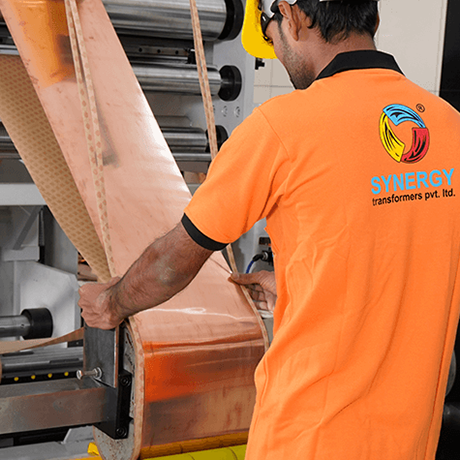
Climate-controlled cleanroom winding bays equipped with automatic tension-controlled foil winding machines for tight dimensional tolerances and maximum dielectric integrity.

Step-lap mitred core assembling combined with deep vacuum drying ovens to remove all residual moisture from insulation pressboard prior to oil filling.
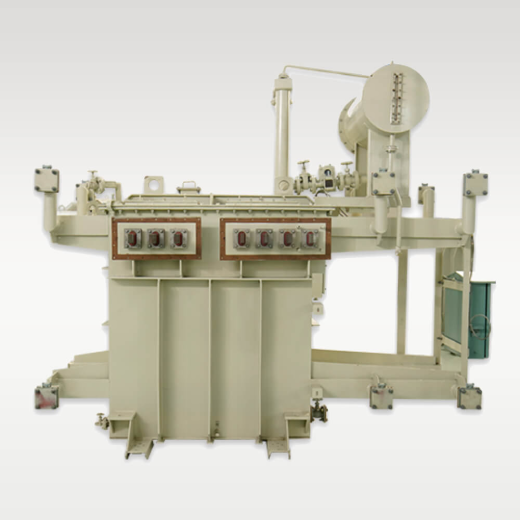
Fully automated test bay featuring computerized power analyzers, high-frequency partial discharge detectors, and impulse generators for complete quality clearance.
Need custom technical specifications, single-line diagram (SLD) evaluations, or competitive project tenders? Our senior application engineering desk is ready to assist you.