
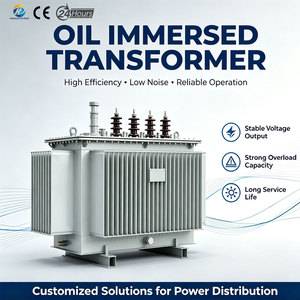
Electric Power & Potential Transformer 3-Phase 10kV/22kV
Heavy-duty oil-immersed unit engineered for utility distribution networks. Offers precision copper/aluminum foil windings, low core loss, and 630kVA to 2000kVA ratings.
Contact UsExplore our export-grade line of single-phase, three-phase, indoor, outdoor, oil-immersed, and cast-resin voltage transformers designed in full compliance with IEC 61869-3, IEC 60076, and IS standards.
Heavy-duty oil-immersed unit engineered for utility distribution networks. Offers precision copper/aluminum foil windings, low core loss, and 630kVA to 2000kVA ratings.
Contact Us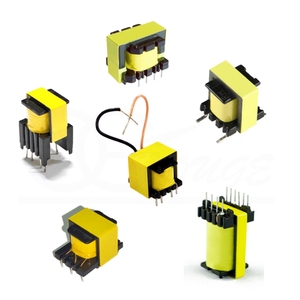
Compact vertical EE10-EE19 high-frequency potential transformers designed for switchgear control boards, electronic signal sampling, and power monitoring circuits.
Contact Us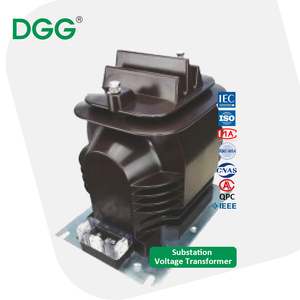
Porcelain-insulated outdoor PT engineered for 11kV sub-station metering and relay protection. Delivers Class 0.2S high precision under extreme environmental conditions.
Contact Us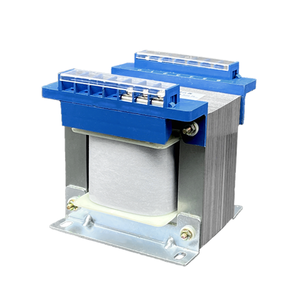
Dry-type isolation control potential transformer manufactured for high-precision CNC equipment, motor drives, and low-voltage industrial automation systems.
Contact Us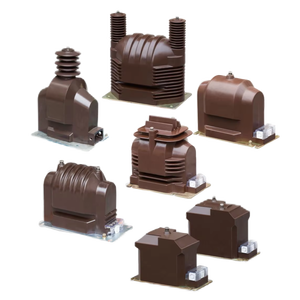
Epoxy resin cast dry-type potential transformer engineered for 10kV to 35kV distribution switchgears. Features high dielectric strength and flame-retardant encapsulation.
Contact Us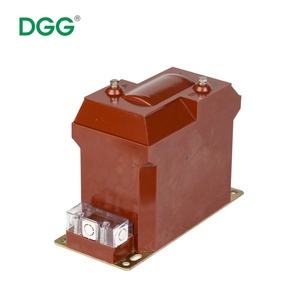
Industry-standard cast resin indoor voltage transformer for phase-to-ground voltage measurement and protection in 11kV metal-clad switchgear cubicles.
Contact Us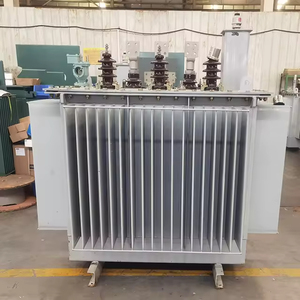
Robust 35kV oil-filled voltage transformer with high-grade porcelain bushings. Designed for three-wire power transmission lines and outdoor grid tie-ins.
Contact Us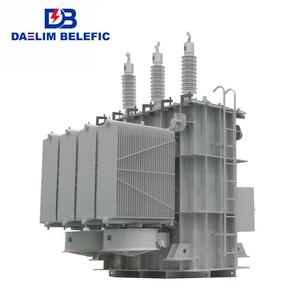
High-capacity grid transformer with integrated potential sensing taps, On-Load Tap Changer (OLTC), and advanced thermal radiator cooling for urban substations.
Contact UsPartner with an established OEM/ODM leader operating from a state-of-the-art industrial footprint engineered for precision, reliability, and full international compliance.
Our plant incorporates high-precision automatic foil winding machinery that replaces wire windings in heavy-duty applications. This design eliminates axial short-circuit forces, reduces local hot-spot temperatures, and significantly lengthens dielectric lifetime.
We utilize Automatic Pressure Gelation (APG) and high-vacuum resin casting technology for dry-type PTs (up to 35kV), achieving void-free epoxy isolation with partial discharge levels below 5 pC. Oil-immersed units undergo multi-stage vacuum oil deaeration and filtration.
Every manufacturing step—from cold-rolled grain-oriented (CRGO) steel core cutting to final tank fabrication and electro-powder coating—is executed under an audited ISO 9001, ISO 14001, and ISO 45001 management system to guarantee standardized quality.
A comprehensive white-paper breakdown of core parameters, insulation types, and accuracy classes for utility specifiers, electrical consultants, and EPC procurement leads.
In electrical power transmission and distribution, Potential Transformers (PT)—interchangeably designated as Voltage Transformers (VT)—are specialized instrument transformers designed to step down high line voltages to standardized, manageable secondary values (typically 110V, 100V, or 110/√3 V). This stepping down provides galvano-isolated inputs for protective relays, digital meters, and SCADA telemetry systems. When sourcing from China wholesale manufacturers, procurement teams must evaluate key electrical parameters to ensure seamless grid integration and operational safety.
Unlike standard step-down power transformers designed for continuous load current transmission, a Potential Transformer operates under conditions near open-circuit. Its primary objective is ratio accuracy and phase angle linearity rather than power rating (kVA). Sizing errors in secondary thermal burden ($VA$) or saturation factors can severely degrade metering accuracy or lead to ferroresonance failure during single-phase ground faults.
Use the comparative matrix below to evaluate standard wholesale manufacturing envelopes across medium and high voltage potential transformer topologies:
| Transformer Type | Voltage Class | Insulation Medium | Accuracy Class Range | Typical Burden (VA) | Primary Application |
|---|---|---|---|---|---|
| Indoor Cast Resin PT (JDZ Series) | 3.3kV – 35kV | Epoxy Resin (APG Cast) | 0.2, 0.5, 3P, 6P | 10VA – 150VA | Indoor Air/Gas Insulated Switchgear (AIS/GIS) Cubicles |
| Outdoor Oil-Immersed PT | 11kV – 132kV | Mineral Oil / Synthetic Ester | 0.2S, 0.2, 0.5, 3P | 30VA – 300VA | Outdoor Grid Substations & Transmission Interconnects |
| Capacitive Voltage Transformer (CVT) | 66kV – 500kV+ | Capacitor Stack + Intermediate Transformer | 0.2, 0.5, 3P | 50VA – 500VA | EHV/UHV Transmission Lines & Power Line Carrier (PLC) |
| Control & Auxiliary Auto PT | Up to 1kV | Dry Type (VPI Impregnated) | Class 1.0, Class 3.0 | 500VA – 10kVA | Industrial Machinery, CNC Control & Panelboards |
| Single-Phase Split-Core PT | 6.6kV – 22kV | Cast Epoxy / Polyurethane | 0.5, 1.0, 3P | 5VA – 50VA | Retrofit Monitoring, Smart Grid Distribution Automation |
Key technological and market shifts driving international B2B buyer specifications over the next decade.
Substation digitisation is driving demand for Non-Conventional Voltage Transformers (NCVTs) and optical voltage sensors equipped with Merging Units (MU). These systems convert analog secondary voltages directly into digital sampled values (IEC 61850-9-2 standard), eliminating copper control cabling and copper-loss burdens across large substations.
Environmental regulations (such as EU F-gas rules) are forcing power utilities to phase out sulfur hexafluoride ($SF_6$) gas in high-voltage PT instrument enclosures. Procurement is rapidly pivoting toward dry-type cast resin PTs for up to 72.5kV or oil-filled PTs utilizing biodegradable natural/synthetic ester fluids with fire points > 300°C.
Solar PV farms, offshore wind turbines, and battery energy storage systems (BESS) inject high-frequency switching harmonics (PWM inverters) into grid interconnects. Procurement specifications now mandate PTs rated for high K-factor harmonic loading, low phase-angle shift at high frequencies, and wide thermal margins.
How leading Chinese wholesale manufacturers leverage modern material science to produce lighter, highly precise, and durable voltage transformers.
Traditional potential transformers rely on cold-rolled grain-oriented (CRGO) silicon steel cores. Advanced OEM manufacturers are increasingly adopting nanocrystalline ribbon alloys for metering cores. Nanocrystalline materials exhibit exceptionally high initial magnetic permeability ($\mu_r > 80,000$) and ultra-low coercive force. This dramatically reduces excitation current requirements, enabling Class 0.2S precision in physical envelopes 40% smaller than legacy transformers.
In dry-type medium voltage PT production, dielectric voiding is the primary root cause of insulation breakdown via partial discharge (PD). Modern Chinese factories utilize fully automated Automatic Pressure Gelation (APG) machinery equipped with multi-stage degasifiers. Epoxy resins are cast under high vacuum and cured under controlled thermal gradients. This ensures partial discharge levels guaranteed below 5 pico-Coulombs ($pC$) at $1.2 \times U_n$, ensuring a maintenance-free service life exceeding 30 years.
Using 3D multiphysics FEA simulation software, structural engineers model electromagnetic losses, thermal dissipation vectors, and short-circuit mechanical stress prior to production. This allows optimized placement of cooling ducts and internal dielectric barriers, preventing insulation degradation caused by continuous overvoltage conditions.
Direct technical answers to common questions asked by international buyers, EPC contractors, and distributor procurement teams.
A Power Transformer is designed to efficiently transfer bulk electrical energy between voltage levels under heavy current loads, prioritizing efficiency and power throughput (kVA/MVA). A Potential Transformer (PT/VT) is an instrument transformer designed strictly for voltage measurement and relay control. It operates near open-circuit conditions, carrying negligible power load (typically 10VA to 300VA), and prioritizes precise voltage ratio phase linearity over power transfer capability.
Selection depends on secondary equipment requirements: Class 0.2 or 0.2S is mandated for tariff revenue metering and commercial billing interties; Class 0.5 is standard for switchgear panel meters and operational telemetry; Class 3P and 6P are protective classes engineered to maintain ratio accuracy under abnormal fault overvoltages (e.g., 3% ratio error at rated voltage factor) to ensure protective relays trip reliably during system ground faults.
Yes. Fully equipped factories support custom winding ratios (e.g., 11kV/√3 to 110V/√3 with secondary residual voltage windings of 110V/3). Units can be designed with up to 3 independent secondary cores—such as Core 1: Class 0.2 for metering, Core 2: Class 3P for relay protection, and Core 3: open-delta connection for ground fault detection.
Every single unit undergoes 100% factory routine testing per IEC 61869-3. Tests include: Winding Resistance Measurement, Voltage Ratio & Polarity Verification, Phase Displacement Measurement, Power Frequency Withstand Voltage on Primary and Secondary Windings, and Partial Discharge (PD) Testing for dry-type units. Type test certificates (lightning impulse, temperature rise) issued by independent ISO/IEC 17025 accredited labs (e.g., KEMA, CNAS) are available upon request.
Standard medium voltage indoor dry-type PTs are typically manufactured within 2 to 4 weeks following GA drawing approval. Custom outdoor oil-filled PTs or high-capacity power units require 4 to 8 weeks. Export orders are packaged in IP56-rated fumigated wooden crates with internal moisture-vapor barrier vacuum bags and desiccant packs to withstand long sea transit.