Explore our high-performance single-phase and three-phase control transformers, engineered for low thermal rise, minimal dielectric losses, and exceptional in-rush current withstand capacity in complex industrial environments.
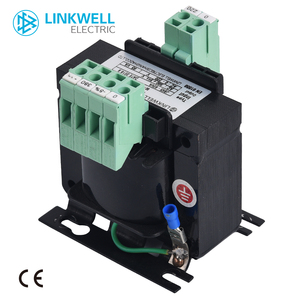
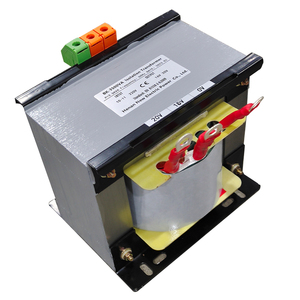
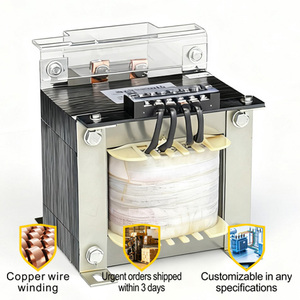
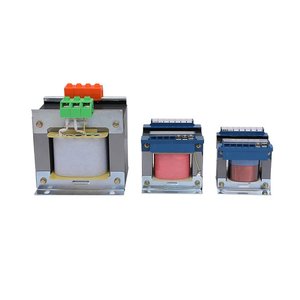
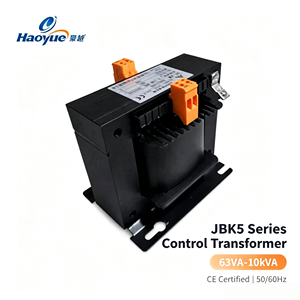
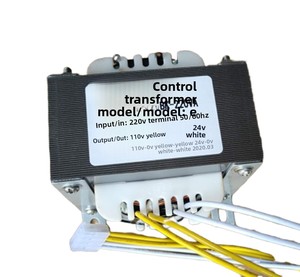
In modern industrial automation, numerical control (NC) machine tools, motor control centers (MCC), and automated production lines, the Control Transformer serves as the backbone of operational stability. Unlike general distribution transformers, control transformers are specifically engineered to provide secondary voltage regulation under high temporary in-rush current loads caused by electromagnetic contactors, relays, solenoids, and magnetic brakes.
As global industries transition toward Industry 4.0 smart manufacturing, the demand for high-reliability, low-loss industrial control transformers has grown exponentially. China has emerged as the global epicenter for control transformer design, precision copper/aluminum foil winding, and specialized core fabrication. Chinese manufacturers combine mature supply chains for cold-rolled grain-oriented (CRGO) silicon steel with advanced Vacuum Pressure Impregnation (VPI) capabilities, delivering units that satisfy stringent international standards including IEC 61558-2-4, NEMA ST-1, and CE / ISO directives.
When an industrial contactor or magnetic starter energizes, it requires an instantaneous in-rush current up to 3 to 10 times its continuous sealed VA rating. A standard transformer experiences a sudden secondary voltage dip under this load, potentially causing relays to chatter or drop out. Our specialized control transformers maintain output voltage stability within ±5% even during peak inductive surge events.
Our state-of-the-art manufacturing facility in China integrates raw material selection, precision winding technology, structural tank engineering, and stringent quality control under one roof.
By employing continuous copper and high-purity aluminum foil winding instead of conventional round wire on high-power control and isolation units, we completely eliminate axial short-circuit force concentration. Foil winding ensures uniform voltage stress, reduces hot-spot thermal gradient rise, and extends insulation life by over 30% under heavy loading cycles.
Every dry-type control transformer undergoes automated Vacuum Pressure Impregnation (VPI) using high-grade Class H (180°C) solventless varnish. This process fills all microscopic voids, eliminates partial discharge risk, prevents moisture absorption, and protects against industrial atmospheres containing oil mist, dust, or airborne chemicals.
We perform 100% routine testing on every transformer before dispatch. Our in-house testing lab is equipped with automated transformer ratio meters, high-voltage separate-source withstand testing, insulation resistance testing, winding resistance measurement, and computerized no-load & load loss verification matrices.
Selecting the optimal transformer topology depends on space constraints, magnetic noise sensitivity, in-rush requirements, and environmental conditions. Review our comparative engineering matrix below:
| Transformer Type | Core Architecture | In-Rush VA Performance | Thermal Efficiency | Noise Level | Primary Industrial Applications |
|---|---|---|---|---|---|
| Toroidal Control Transformer | Continuous Ring Silicon Core | Good (Low Stray Field) | Superior (>96%) | Ultra-Quiet (<30dB) | Medical instruments, audio controls, CNC micro-controllers. |
| BK / JBK5 EI Transformer | High-Grade Lamination EI Core | Excellent (Heavy Duty) | High (>92%) | Standard (<45dB) | Machine tools, switchgear cabinets, motor control circuits. |
| Cast Resin Dry-Type | Epoxy Vacuum Cast Core-Coil | High In-Rush Capable | High (>95%) | Quiet (<40dB) | High-rise buildings, commercial indoor sub-stations, cleanrooms. |
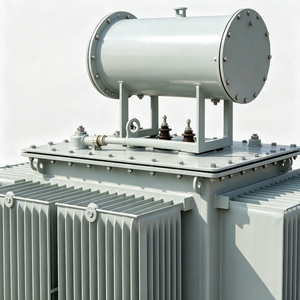
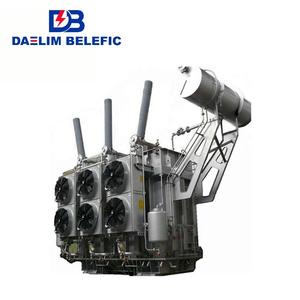
| Oil-Immersed Power Unit | Stacked CRGO Core in Oil Tank | Maximum Grid Scale | Premium (>98%) | Standard Utility | Regional power distribution, mining, outdoor power substations. |
As global OEM equipment manufacturers, utility contractors, and plant engineers re-evaluate their procurement strategies, four key technological shifts are transforming the industrial control transformer market:
Modern control transformers are increasingly specified with integrated PTC thermistors, PT100 temperature sensors, and smart IoT telemetry modules. Real-time temperature and insulation wear monitoring allows plant maintenance teams to transition from reactive maintenance to predictive health diagnostics, avoiding costly un-scheduled production line downtime.
Global decarbonization mandates (such as Europe's Eco-design regulations and China's Green Factory standards) are pushing manufacturers to drastically cut no-load magnetic losses. The adoption of high-permeability, ultra-thin silicon steel laminations and amorphous alloy cores allows control transformers to reduce standby core loss by up to 25% compared to legacy designs.
With the rapid proliferation of Variable Frequency Drives (VFDs), switch-mode power supplies (SMPS), and solid-state relays on industrial floors, electrical control systems face severe harmonic distortion. Future-ready control transformers incorporate electrostatic copper shields between primary and secondary windings and high K-factor thermal designs to absorb non-linear harmonic loads without overheating.
Machine tool exporters targeting worldwide markets require control transformers capable of handling multi-regional input voltages (such as 480V/440V/415V/380V/220V) and delivering standardized secondary control power (110V/24V/12V). Modular terminal block layouts with touch-safe IP20 fingers are quickly becoming standard for seamless global compliance.
The engineering topology of industrial control transformers has evolved significantly over the past two decades. Early control transformers relied on heavy, un-varnished core assemblies susceptible to high magnetic hum and thermal aging. Today, China's leading manufacturers leverage computer-aided Finite Element Analysis (FEA) to simulate electromagnetic flux distribution, stray losses, and cooling airflow.
By optimizing core clamping pressure, annealing silicon steel sheets under inert gas atmospheres, and applying computer-controlled precision bobbin winding, current-generation control transformers deliver:
Technical guidance for electrical engineers, OEM machine builders, and international procurement specialists.
Connect directly with our engineering desk for technical drawing reviews, custom voltage tap requests, or competitive factory-direct quotations for your next project.
