Discover our flagship range of low-voltage and high-voltage capacitor banks, intelligent APFC panels, and self-healing power factor correction units designed for heavy industrial and utility loads.
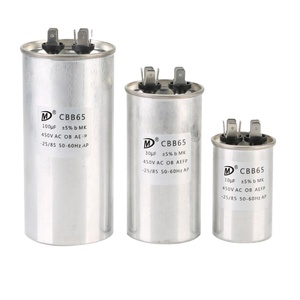
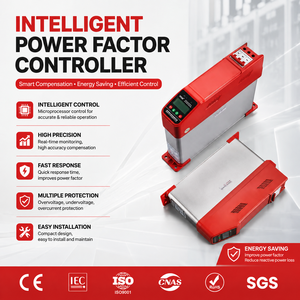
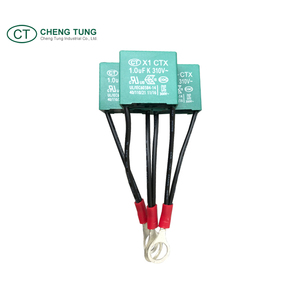
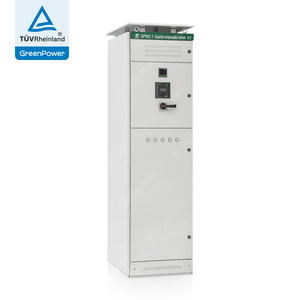
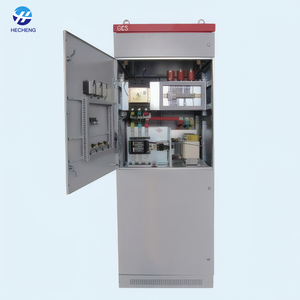
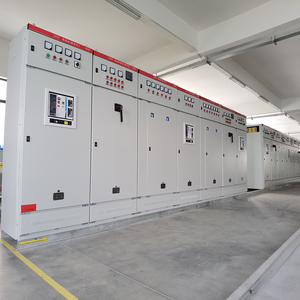
In modern industrial manufacturing and electrical distribution networks, reactive power management is no longer a simple operational checklist—it is a critical pillar of energy efficiency, equipment thermal longevity, and power quality compliance. As heavy industrial facilities incorporate non-linear loads such as variable frequency drives (VFDs), induction arc furnaces, and automated robotics, the demand for stable, transient-free reactive power compensation has surged dramatically.
As a leading ISO-certified manufacturer and global supplier, Synergy Electrical Group leverages over 20 years of high-voltage and power equipment manufacturing experience (operating out of our modern 103,500+ sq. ft. manufacturing complex in Rajkot, Gujarat, India). Our engineering team designs custom Low Voltage (LV) and High Voltage (HV) capacitor banks engineered in strict accordance with IEC 60831-1/2, IEEE Std 18, IS 13585, and AS/NZS standards.
Uncompensated reactive power ($kVAR$) increases the total apparent power ($kVA$) drawn from distribution transformers, resulting in elevated $I^2R$ thermal copper losses, excessive voltage drop across long cable runs, and severe financial penalties imposed by electric utilities for low power factor (typically below 0.95 or 0.98). Installing a properly sized automatic capacitor bank supplies the lagging inductive current locally, freeing up transformer capacity and driving the power factor up to unity ($\cos \phi \approx 0.99$).
However, simple capacitor insertion into networks dominated by harmonics can lead to catastrophic electrical resonance. When the capacitive reactance ($X_C$) matches the inductive reactance ($X_L$) of upstream transformers at harmonic frequencies (e.g., 5th, 7th, 11th harmonics), current amplification occurs. This amplifies thermal stress, degrades dielectric film, and leads to premature capacitor rupture. To combat this, modern procurement teams mandate De-tuned Harmonic Reactors (typically 5.67%, 7%, or 14% detuned ratio) connected in series with capacitor banks to shift the resonant frequency below the lowest dominant harmonic order.
Every industrial capacitor bank and APFC cabinet leaving our manufacturing bays undergoes rigorous stage testing under an integrated ISO 9001 quality system. Below are the structural and electrical engineering advantages that set our power factor equipment apart from standard commodity market alternatives:
Utilizing high-grade metallized polypropylene (MPP) film with zinc-aluminum alloy vacuum deposition. In the event of a dielectric puncture from transient overvoltages, the localized arc vaporizes the thin metallized layer around the fault within microseconds, restoring full insulation integrity without capacity loss.
Traditional mechanical contactors introduce heavy current inrush transients (up to 200x rated current) and voltage spikes when switching capacitor steps. Our dynamic APFC panels feature solid-state thyristor switches that engage precisely at the voltage zero-crossing point, eliminating transients and extending switching life to millions of cycles.
Integrated with internal pressure disconnectors (tear-off proof fuses), flame-retardant dry resin encapsulation, and discharge resistors that safely bleed residual terminal voltage below 50V within 60 seconds of disconnection, ensuring complete operator safety during routine maintenance.
Consultants, plant electrical managers, and EPC contractors can utilize the technical breakdown below to select the precise capacitor bank topology for their specific facility profile:
| Capacitor Bank System Type | Voltage Class | Switching Mechanism | Harmonic Handling | Ideal Application Profile |
|---|---|---|---|---|
| Standard LV APFC Panel | 400V – 690V | Capacitor-Duty Contactors | Low (THDv < 3%) | Commercial buildings, light manufacturing, stable inductive motor loads. |
| Detuned De-Harmonic APFC Bank | 400V – 1000V | Heavy-Duty Contactors + 7% Reactor | Medium to High (THDi up to 35%) | Automotive plants, textile mills, plastic extrusion, facilities with VFDs. |
| Dynamic Thyristor Capacitor Bank (TSF) | 400V – 690V | Solid-State Thyristor Modules | High (Sub-cycle response < 20ms) | Arc welding stations, harbor cranes, stamping presses, rapid fluctuating loads. |
| High Voltage (HV) Metal-Enclosed Bank | 3.3 kV – 33 kV | Vacuum Circuit Breaker (VCB) / Switch | Custom Filter Reactor Tuning | Electrical utilities, steel melting shops, mining substations, solar PV plants. |
| Hybrid Active Harmonic & VAR Panel | 400V – 690V | IGBT Inverter + APFC Steps | Ultra-High (Mitigates up to 50th order) | Data centers, semiconductor fabs, hospitals, microgrids with sensitive electronics. |
As global industrial sectors transition toward Industry 4.0 automation and green energy grid integration, procurement managers must align their capital expenditure (CapEx) with evolving technological shifts. Key procurement trends shaping the capacitor bank manufacturing landscape include:
1. Transition from Mechanical Contactors to Hybrid & Thyristor Dynamic Compensation: Plant operators are phasing out electromechanical contactors due to contact welding, severe wear, and high transient shock. High-speed thyristor switching panels (responding within 5 to 20 milliseconds) are becoming the baseline requirement for modern automated factories.
2. Mandatory De-Tuning & Active Filtering Integration: With strict grid code compliance enforced by power discoms worldwide (such as IEEE 519 harmonic limits), standalone un-tuned capacitors are rapidly being replaced by detuned filter banks or hybrid active power quality systems combining static VAR generators (SVG) with stepped capacitors.
3. IoT-Enabled Predictive Maintenance Telemetry: Modern APFC controllers now feature embedded Modbus-TCP, Ethernet, and cloud-connect gateways. Maintenance managers can track real-time capacitance decay, individual stage operating hours, internal temperature gradients, and THD alarms via remote dashboards before a component failure leads to utility penalties.
4. Dry-Type Eco-Friendly Dielectrics: Regulatory frameworks across Europe, North America, and Asia-Pacific are restricting PCB and hazardous liquid-filled capacitors in favor of environmentally safe dry-type resin encapsulated or inert gas-filled (N2/SF6-free) capacitor modules with zero risk of oil leakage or catastrophic fire.
Clear, authoritative answers to critical technical and commercial queries regarding capacitor bank selection, sizing, compliance, and shipping.
Submit your single-line diagram (SLD), load details, or utility power quality reports to our senior application engineering team. We deliver custom engineering solutions, technical dossier approvals, and competitive direct-from-factory quotes.
