☉ Manufacturing since 2004 · Rajkot, Gujarat, India ✉ [email protected] ☎ +91 958 627 7766

Distribution Transformer Supplier & Engineering Solutions in Melbourne

High-Efficiency, AS/NZS Compliant Cast Resin Dry-Type & Oil-Immersed Distribution Transformers Custom-Engineered for Victoria's Utility & Industrial Infrastructure

Product Catalogue

AS/NZS & IEC Standard Distribution Transformers

Explore our premium range of oil-immersed step-down, cast resin dry-type, and isolation transformers tailored for Melbourne CBD, industrial precincts, and Victorian energy grids.


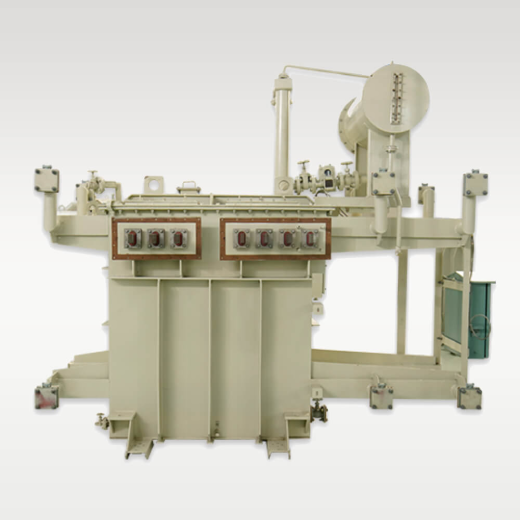
69kV 33kV ONAN Oil Immersed Power Transformer
69kV 33kV 10MVA–30MVA ONAN Copper Oil Immersed Transformer
  • Primary Voltage: 69kV / 33kV Step Down
  • Cooling: ONAN / ONAF Natural Oil
  • Winding: 100% High-Conductivity Copper
  • Compliance: IEC 60076 & AS 2374
Contact Us
11kv 22kv Cast Resin Dry Type Transformer
11kV 22kV 1250kVA–4500kVA Cast Resin Dry Type Transformer
  • Voltage: 11kV / 13.2kV / 22kV to 0.415kV
  • Class: F1 Fire-Safe / E2 / C2 Indoor
  • Insulation: Epoxy Resin Cast (Class H/F)
  • Application: Commercial High-Rise & Malls
Contact Us
High Quality Dry Type Isolation Transformer
50kVA–630kVA 380V/415V/480V Dry Isolation Transformer
  • Secondary Output: 415V 3-Phase Stable
  • Features: Galvanic Isolation & Noise Filter
  • Certificate: CE & ISO Certified
  • Ideal For: Industrial Machinery & Automation
Contact Us
Low Loss SCB Series Step Down Transformer
Low Loss SCB Series 315kVA 10kV/11kV Step Down Transformer
  • Efficiency Rating: AS/NZS MEPS Tier Compliant
  • Structure: SCB Epoxy Resin Encapsulated
  • Partial Discharge: < 10 pC Ultra Low Noise
  • Design: Maintenance-Free Compact Footprint
Contact Us
400kva 15KV 0.4KV Step Down Transformer Data Center
400kVA 11kV/15kV 0.415kV Transformer for Data Centers
  • Duty: Continuous K-Factor Rated Load
  • Cooling: AN/AF Forced Air Reserve
  • Protection: IP23 / IP54 Enclosure Options
  • Application: Data Hubs & Industrial Facilities
Contact Us
High Efficiency IEC Standard 20KV 30KVA Transformer
IEC Standard 22kV/20kV to 0.415kV 3-Phase Step Down Unit
  • Voltage Rating: 22kV Regional Utility Standard
  • Capacity: Custom 30kVA up to 2500kVA
  • Vector Group: Dyn11 Standard
  • Thermal Standard: Class H 180°C Rated
Contact Us
Medical Grade Dry Type Isolation Transformer
100kVA–400kVA Medical & Industrial Grade Isolation Unit
  • Grade: Medical & Heavy Precision Equipment
  • Shielding: Electrostatic Copper Shielded
  • Harmonic Handling: Low THD Output
  • Compliance: IEC 60076-11 Standard
Contact Us
3 Phase AC Isolation Transformer 15kva to 50kva
15kVA–50kVA 220V/380V/415V 3-Phase Low Voltage Transformer
  • Step Ratio: Customized Dual Voltage Taps
  • Winding: 100% Foil/Wire Copper Coil
  • Enclosure: IP20/IP21 Compact Cabinet
  • Usage: OEM Machine Building & Solar Inverters
Contact Us
103,500+
Sq. Ft. Advanced Manufacturing
20+
Years Engineering Expertise
3,000+
Global Grid Installations
100%
AS/NZS & IEC Routine Tested

Navigating Melbourne’s Electrical Grid: Distribution Transformer Procurement Guide

As Greater Melbourne and Victoria continue their aggressive transition toward net-zero carbon targets, urban density expansion, and heavy industrial automation, the demand for high-reliability, energy-efficient distribution transformers has reached an unprecedented peak. Power distribution in Victoria operates under a stringent regulatory framework managed by distribution network service providers (DNSPs) including CitiPower, Powercor, Jemena, AusNet Services, and United Energy. For electrical engineers, EPC contractors, and procurement executives sourcing transformers in the Melbourne market, satisfying both utility grid codes and project-specific thermal, acoustic, and environmental criteria is paramount.

Selecting an authoritative distribution transformer supplier in Melbourne requires a comprehensive understanding of Australian Standards (AS/NZS 60076 series), Minimum Energy Performance Standards (MEPS), and the local operating environments ranging from humid coastal sites along Port Phillip Bay to dense urban substations in Docklands and Melbourne CBD.

Victorian Grid Voltage Configurations & Standard Compliance

In Victoria, standard distribution voltages typically transition from 22kV or 11kV high-voltage feeder networks down to a standardized 3-phase low-voltage supply of 415V (line-to-line) / 240V (line-to-neutral), aligned with the 400V/230V nominal standard. Transformers deployed across Victoria must withstand extreme ambient heat variations, rapid solar thermal loads, and localized harmonic distortions generated by heavy inverter penetration.

Transformer Type Primary Voltage Range Secondary Voltage Cooling / Vector Group Primary Local Application
Cast Resin Dry-Type 11kV / 22kV / 33kV 415V / 400V (Dyn11) AN / AF (Class F/H) High-rise buildings, Melbourne CBD indoor substations, Data Centers
Hermetically Sealed Oil-Filled 11kV / 22kV / 33kV 415V / 240V (Dyn11) ONAN (Mineral/Ester Oil) Suburban distribution, Industrial Parks (Dandenong, Laverton)
Inverter-Duty Renewable 22kV / 33kV 600V / 690V / 800V ONAN / ONAF Multi-winding Regional Victorian Solar Farms, Wind Parks, BESS Installations
Compact Substation (CSS) 11kV / 22kV 415V Integrated Kiosk IP54 Enclosure Infrastructure projects, Rail Loop substations, EV Fast Chargers
Technical Innovations

Engineering Features Built for Victorian Conditions

Every distribution transformer supplied to the Melbourne market incorporates high-grade core geometry, advanced foil windings, and environmental protection systems.

Foil Winding Technology

Utilizing continuous copper or aluminum foil conductor technology for low-voltage coils eliminates axial short-circuit forces, reduces localized hot-spot temperatures, and substantially increases transformer service life under fluctuating urban loads.

AS/NZS MEPS Energy Efficiency

Manufactured using high-permeability Cold-Rolled Grain-Oriented (CRGO) silicon steel cores with step-lap mitred joints, minimizing no-load core losses to meet and exceed Australia's Minimum Energy Performance Standards (AS/NZS 60076.11).

F1 Fire-Safe Cast Resin

Self-extinguishing epoxy resin formulations comply with F1 fire protection classes. Units produce zero toxic gas emissions and halogen-free properties, making them mandatory for underground rail corridors and CBD basements.

Localized Application Scenarios across Greater Melbourne & Victoria

Distribution transformers are not standard off-the-shelf commodities; their internal design must match the precise duty cycle of the installation site. In Melbourne, five distinct application profiles dominate procurement requests:

1. Urban High-Rise & CBD Infrastructure (Melbourne CBD, Southbank, Docklands)

Space limitations and fire safety codes governed by the National Construction Code (NCC) demand compact, flame-retardant Cast Resin Dry-Type Distribution Transformers. Operating in basement plant rooms or mid-building plant floors, these units feature IP21 to IP33 enclosures, low acoustic vibration profiles (<58 dB), and Class H insulation (180°C thermal limit) to prevent fire hazards without requiring expensive oil containment bunds or deluge fire suppression systems.

2. Heavy Manufacturing & Logistics Hubs (Dandenong South, Campbellfield, Laverton North)

Victoria's manufacturing heartlands run non-stop production processes involving heavy motor starting currents, welding equipment, and automated machinery. Here, robust oil-immersed distribution transformers (500kVA to 3150kVA) featuring on-load or off-circuit tap changers (OLTC/OCTC) provide voltage regulation against utility grid sags. Corrosion-resistant C4/C5 painted tanks withstand industrial atmospheric pollutants and coastal salt spray.

3. Mission-Critical Data Centers & Telecommunications (Tullamarine, Deer Park)

Melbourne has emerged as a premier data center hub in the Asia-Pacific region. Data facilities demand distribution transformers designed for high non-linear loads with K-Factor ratings (K-9, K-13, K-20). Equipped with electrostatic copper shields between primary and secondary windings, our isolation transformers suppress high-frequency electrical noise, harmonics, and switching transients, preserving sensitive server infrastructure integrity.

4. Renewable Energy & Battery Storage Integration (Regional Victoria & Renewable Energy Zones)

Connecting solar PV power plants, wind turbines, and Battery Energy Storage Systems (BESS) to Victoria's 22kV or 33kV network requires specialized step-up inverter-duty transformers. Designed to withstand repetitive pulse-width modulation (PWM) voltage stresses, cyclic thermal expansion, and bi-directional power flow, these multi-winding transformers (e.g., dual LV input windings to single HV output) ensure stable grid tie-ins.

5. Electric Vehicle (EV) Fast-Charging Infrastructure & Smart Sub-Networks

With ultra-fast EV charging hubs expanding along the Hume Highway and Monash Freeway, local grid connections require specialized kiosk-style Compact Secondary Substations (CSS). Combining high-voltage switchgear (RMU/VCB), a low-loss distribution transformer, and a low-voltage distribution panel in one weather-proof IP54 housing, CSS units provide rapid plug-and-play installation for charge-point operators.

Victorian Distribution Transformer Market Trends & Technical Evolution

The Australian transformer landscape is undergoing a technological revolution driven by three major catalysts:

  • Adoption of Synthetic & Natural Ester Fluids (Vegetable Oils): In bushfire-prone Victorian zones, traditional mineral oil is increasingly replaced with biodegradable ester fluids (K-class fluids with fire points >300°C). Ester-filled transformers drastically reduce environmental soil-contamination risks and bushfire ignition hazards.
  • Smart Transformer Monitoring & IoT Sensors: Grid operators like Powercor and AusNet are mandating real-time digital monitoring. Modern distribution transformers now integrate online Dissolved Gas Analysis (DGA) interfaces, winding temperature indicators (WTI), oil level telemetry, and fiber-optic hotspot sensing for predictive maintenance.
  • Strict Compliance with MEPS 2019 Loss Tariffs: Energy efficiency regulations dictate lower maximum allowable losses for both no-load (iron losses) and load (copper losses). Modern transformer suppliers must validate loss figures through NATA-accredited or IEC-certified laboratory test reports.
Manufacturing Rigor

Why Engineers Choose Our Distribution Transformers

Combining over 20 years of manufacturing excellence with state-of-the-art winding technology, every unit undergoes rigorous stage checks from raw core cutting to final witness testing.
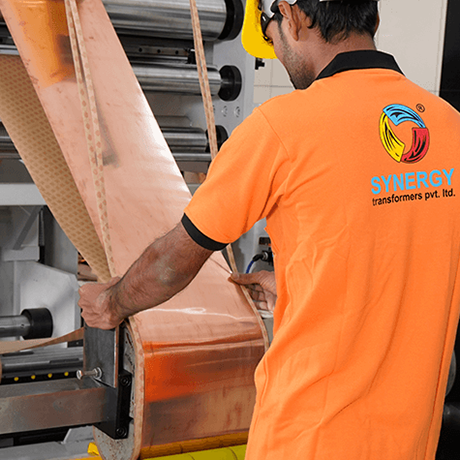
Advanced Winding Technology

Precision Foil Winding

Our 103,500+ sq. ft. plant features automated foil winding machinery that guarantees precise tension control, zero transposition loss, and unmatched short-circuit withstand capabilities.

Energy Efficient Core Assembly

Laser-Cut CRGO Core Assembly

We source prime-grade magnetic silicon steel directly from world-class mills. Step-lap core stacking minimizes stray magnetic flux, reducing audible humming noise to under utility threshold limits.
Routine Testing Bay Laboratory

100% In-House Routine Testing

Every transformer is subjected to strict routine tests—including voltage ratio, vector group verification, winding resistance, insulation resistance, partial discharge, and separate-source AC withstand testing.

Buyer FAQ

Frequently Asked Questions by Melbourne Procurement Engineers

Get instant answers regarding Australian Standards compliance, voltage customization, delivery timelines, and factory acceptance testing (FAT).

Do your transformers comply with Australian Standards AS/NZS 60076 and MEPS requirements?
Yes. All distribution transformers supplied to the Melbourne market are engineered and tested in accordance with AS/NZS 60076 (Power Transformers) and comply strictly with Australia’s Minimum Energy Performance Standards (MEPS). Fully documented type test reports and routine test certificates detailing no-load and load loss guarantees are provided with every dispatch dossier.
What are the standard primary high-voltage ratings available for Victoria?
We manufacture standard 11kV, 22kV, and 33kV primary voltage class transformers step-down to standard Australian low voltage of 415V (3-Phase) or 240V (Single Phase). Custom primary voltage tappings (e.g., ±2.5%, ±5% off-circuit tap changer or ON-Load Tap Changer OLTC) are custom built according to utility requirements like CitiPower, Powercor, or AusNet specification sheets.
Should I choose a Cast Resin Dry-Type or Oil-Immersed transformer for my Melbourne site?
Cast Resin Dry-Type transformers are mandatory for indoor installations, Melbourne CBD high-rises, hospitals, and underground facilities where fire safety (Class F1) and non-toxicity are non-negotiable. Oil-immersed transformers (using mineral oil or eco-friendly ester fluid) offer superior cooling efficiency and lower upfront capital cost, making them ideal for outdoor industrial parks, pole-mounted utility networks, and regional solar farms.
Can Australian clients witness Factory Acceptance Testing (FAT) or third-party inspections?
Absolutely. We welcome witness testing by client engineers or independent third-party inspection agencies (such as SGS, Bureau Veritas, or Intertek). Testing procedures include winding resistance, turns ratio, vector phase check, impedance voltage, short-circuit loss, partial discharge, and high-voltage dielectric withstand tests.
What is the typical delivery lead time for project sites in Greater Melbourne?
Standard distribution transformers (100kVA to 2500kVA) typically take 4 to 6 weeks from drawing approval to dispatch clearance. Custom-engineered power transformers, furnace transformers, or multi-winding inverter duty units generally require 6 to 9 weeks, complete with seaworthy export packaging and direct shipping into the Port of Melbourne.
How does continuous foil winding improve performance over conventional wire winding?
Foil winding eliminates axial electrical stress points and crossover transposition joints within the coil structure. Under sudden low-voltage short-circuit faults on the grid, foil-wound coils distribute axial forces evenly across the entire height of the winding, preventing mechanical coil deformation and substantially reducing internal thermal hot-spots.

Request a Customized Technical Quote for Melbourne Delivery

Partner with an established distribution transformer supplier. Submit your single-line diagram (SLD), voltage rating, kVA capacity, or specification sheet to our senior power engineering desk today.

Contact Us






